Category: Real Estate Best Practices

  • How to Build Business By Giving it Away

    How to Build Business By Giving it Away

    I recently read a blog post about the importance of client trust to business development and it really resonated with me.  Written by Tara Weintritt at the Wicker Park Group, I encourage you to take two minutes to go here and read it.

    I thought about what Weintritt had to say in the context of my real estate and legal careers.

    “We can do anything… for revenue.”

    When I started working at JLL 24 years ago, one of the managing directors in the office told me that if anyone ever asked me if JLL provided “X service,” to say “Yes” and we would figure out how to provide that service later.  For a long time, I thought this was a great approach.  But JLL was a big (soon to be enormous) firm and we legitimately had the resources to provide most real estate services.  It was usually just a matter of researching where in the company we had the expertise.

    I have since changed my position on this.  I think the best answer if you don’t know if your company or firm can provide X service, is to say “I don’t know.  Let me find out if we can help or — if we can’t — who would be the best person outside of our organization to do so.”

    This applies across industries but my experience is germane to the legal and real estate industries.

    Or, we could think about the client.

    I most recently worked at a small real estate firm in Birmingham.  We had a tiny brokerage team and between my partner and I, we were REALLY good at office tenant rep and building purchases and sales.  We were not industrial experts.  I was not a retail expert.  And I am not a great landlord representative because my whole career has been devoted to the tenant side of the equation.

    As a result, I turned down some revenue-generating work that me and my firm probably could have used because I didn’t think I was the best person to do it.  But you know what invariably happened? Turning down work (and referring clients to other brokers) invariably earned me my client’s trust and loyalty.  Ultimately, this meant they sent me a bigger proportion of their office work.

    I have also encouraged clients to do shorter term deals or lease a smaller square footage when I thought it was in their best business interests knowing that it meant a smaller commission for me.  Not only was it the right thing to do, but it always paid off in increased client loyalty.

    From the legal side, I have had real estate clients who sent draft leases to their attorneys for review.  I would get the red-lined leases back and wonder if the attorney reviewing them had ever looked at a lease in their life.  Inevitably, I would find out that the client’s general business attorney had done the comments themselves – even though they had no experience with commercial office leases and even though they had real estate attorneys in their firm that did – just to keep the billable hours for themselves.

    The Long Game

    This is (and was) short-sighted.  One of those clients ended up moving all of its business to another firm because they were so frustrated with paying legal fees for useless lease reviews.  If instead their general business attorney had said “I am not experienced in this work but know someone who is great at it.  Would you like me to connect you or contact them directly?” my client would still be working with the firm.

    The lesson:  Make sure your clients have the exact right person working with them on each and every need – even it it’s not you – and over time, it will come back to you with increased client loyalty and trust.  Play the long game.

  • Why Notice Addresses Matter

    Why Notice Addresses Matter

    Your notice address is not a sexy topic, but it’s one that needs to be discussed. Give me two minutes.

    The Set Up

    • Your landlord doesn’t receive your rent check.
    • Space contiguous to yours becomes available and the landlord knows you might need more space.
    • You park a truck, car or horse & carriage at your building overnight and that action constitutes a default under your lease.

    All of these are instances where the landlord might need to give a tenant notice.  And all leases dictate how notice is to be given.  This notice language works great when the tenant only has one location.  If notices go to the tenant at that location, the tenant is assured of getting notice and curing any defaults or exercising any option rights.

    The Issue

    A problem arises when a tenant has more than one location.  If each of a tenant’s different leases states that landlord must give tenant notice at that specific location and that location is a remote office which is either not regularly staffed or staffed with Billy Bob who doesn’t know how to handle such a notice, the odds of the notice being received by someone who will act on it are slim.

    An Example

    Suppose a landlord sends the tenant notice of a change in rent payment address and that notice goes to the local office.  Further suppose the tenant’s headquarters does not receive this information and so it sends rent to the previous rent payment address.  As a result, the landlord does not receive rent.

    The landlord then sends notice of default for nonpayment of rent to the tenant at the local office.  Again, the employees at the local office (Billy Bob) don’t know what to do with this notice so they make a bunch of phone calls over a two-week period trying to figure it out.  By that time, BEST CASE, the landlord accepts a late payment with penalties and late fees.  WORST CASE, the landlord declares tenant in default and pursues its remedies up to and including lease termination.

    The goods news?  This is an extremely easy problem to both fix and avoid.

    Avoid the Problem

    When you enter into new leases, dictate that all corporate leases have the same notice address (headquarters; not Billy Bob at the local office) with a copy to general counsel or outside counsel.

    Fix the Problem

    To fix existing leases, send a form letter to all of your landlords (making sure you use the correct landlord notice address) stating that going forward, all notices to tenant must go to headquarters with a copy to general counsel or outside counsel.

    If you want to make sure you never miss a notice date yourself, read this!


  • What Does “Turnkey” Mean?

    What Does “Turnkey” Mean?

    Many landlords promise prospective tenants a “turnkey” buildout, meaning the tenant will show up on the date its lease commences, “turn the key” and walk into finished space.  The landlord determines the costs it is willing to incur for this turnkey buildout based on the rental rate and term length, however,  the actual dollar amount of that turnkey buildout is seldom disclosed to the tenant.

    A problem arises when the draft lease stipulates a turnkey buildout and references nothing more than a simple test fit drawing indicating where offices, doors, kitchens, and conference rooms are located. The tenant may be expecting glass-walled offices, a kitchen with upper and lower cabinets and appliances, hardwood floors, and high end lighting.  The landlord may deliver sheetrock office walls, rolled carpet, fluorescent lighting, and a bare bones kitchen with holes where the refrigerator and microwave the tenant is expected to buy will go.

    Also, there will usually be insufficient teledata and electrical outlets.

    It is crucial that tenant advisors walk their clients through the process of  defining turnkey prior to lease execution.  It is also in the landlord’s best interest as it ensures that everyone is on the same page and there is no mid-construction conflict.

    What do we need to address to define Turnkey?

    Walls and Doors

    Identify where walls will be located and whether or not those walls go all the way to the deck.  (Note, walls built to the deck provide much better sound insulation but also cost more to build.)  Define the locations of doors, sidelites, and glass.  Stipulate the door heights.

    Expensify Portland – definitely not “turnkey” walls

    Lighting

    Ask where the lighting is going to be located and what type of lighting will be installed.  Will it be energy efficient such that it will turn off when there is no one occupying the space?

    Ervin and Smith – probably not “turnkey” lighting

    Kitchens

    Will there be a kitchen?  Will have it plumbing so that you can draw water from a faucet?  (Trust me: wash your coffee pot in one of the building’s bathroom sinks for a day or two and you will understand the importance of a kitchen sink and faucet!)  Will there be upper and lower cabinets?  What is the counter material?  Will the landlord provide appliances?

    Airbnb’s Paris Kitchen Conference Room – in my dreams, this is my “turnkey” kitchen

    Flooring

    What will the flooring be throughout the space?  If you are going to have carpeted areas, is the carpet going to be carpet tiles (MUCH easier to replace worn areas in the future) or rolled carpet?  If you are going to have concrete floors, will they be stained?  Finished?  What is the kitchen flooring?

    KSGB lobby – nope, probably not going to be turnkey

    Baseboards and Molding

    Will the space have rubber base or wooden baseboards?  Will the offices (or even just the conference rooms) have crown molding?

    LinkedIn Paris – if this is turnkey, I don’t want to see the rental rate

    Outlets

    Where are your electrical outlets and how many will there be in each office?  Will the landlord install teledata outlets and just let the tenant’s contractor pull the actual cable?

    Venable – This is probably turnkey if you want to pay rent on the patio

    System Upgrades

    If the space is second generation and any building systems need to be updated, will that be done and will landlord bear those costs?

    Furniture Move Costs

    If you already occupy the space and the landlord is promising to provide new carpet and paint “turnkey,” does the landlord plan to cover the cost of moving the existing furniture to allow the work to proceed?  Will the landlord cover the cost of that work happening during non-business hours, i.e. when landlord’s labor costs are higher?

    Is All of This Really THAT Important?

    Yes.  Absolutely.

    First, read this discussion of the five interior finishes that make a Class A build-out Class A.

    These things matter.  Sound proofing matters.  And cost differentials are big.

    Nobody like surprises.  If you take the time to define turnkey ahead of construction, everyone knows what to expect and nobody gets an unexpected bill.

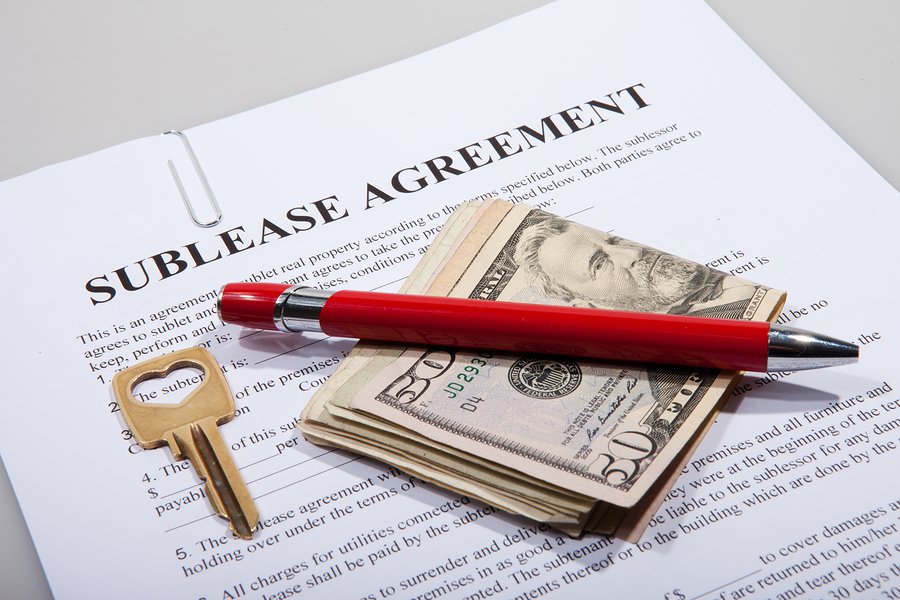
  • What Does It Really Cost to Sublease Your Space?

    What Does It Really Cost to Sublease Your Space?

    Your company acquires a company in a city where you already have an office.  Your business model changes and you need less space than you once did.  You grow and need more space so you have to relocate.  Or, unfortunately, your business in a tertiary market dries up and you close that office.

    All of these scenarios can trigger the need to dispose of excess space.  If that space is leased and you do not have a termination option in your lease, you will need to consider subleasing it.

    I often have clients approach me about subleasing space for them – something I am happy to help them do.  I always spend time on the front end making sure they know the expenses associated with subleasing so that they have realistic recovery expectations.

    Rental Rate

    Because a subtenant is buying your remaining obligation, they are going to expect a discount off of your rental rate – even if that rate is already below market.  The size of the discount is often related to the term remaining on your lease.  Since relocating an existing office or opening an office is expensive,  a larger discount from market is expected on a shorter term.

    Commissions

    The landlord is responsible for paying both the landlord’s and the tenant’s brokers’ commissions.  This amount is market dependent but a good rule of thumb is to plan on paying 6% of the sublease value in total commissions.

    Downtime

    It takes time to find a tenant, negotiate a sublease, negotiate a consent with the master landlord[i], and do any construction/furniture installation required for move-in.  Downtime can easily range from three to 12+ months.

    Concessions

    Depending on your market, a tenant improvement allowance or free rent may be necessary incentives to induce a tenant to sublease your space.  If you do not want to come out of pocket for tenant improvements, be prepared to offer free rent in lieu of an allowance.

    Legal Fees

    You will incur legal fees to draft the sublease.  In addition, many leases require tenants to pay the legal fees incurred by the master landlord in reviewing the sublease and consent documents.  Plan on a minimum of $2,000.00 and know that these costs can skyrocket if your lease is large, your obligation is a longer term or the subtenant is difficult.

    Demising Costs

    If you are only subleasing a portion of your space, you will incur costs to physically separate that space from the space you intend to keep.  Those costs could be as small as building one wall or as large as separating an HVAC loop, relocating a server room or adding additional egress points.

    Is There Anything Left?

    In the spirt of “underpromise and overperform,” I advise clients to plan on a 50% recovery of their obligation through sublease.  Sometimes, depending on the market and the lease rate, we can do better.  But the costs add up – and now you know why.


    [i] Many leases give the master landlord 30 days to consent to a sublease once it has been executed by the subtenant and sublandlord.

  • What is a “gross-up” and why should I care?

    What is a “gross-up” and why should I care?

    Have you ever read the following language in the operating expense section of a lease and wondered why it was there?

    “If, in the Base Year or any Expense Year, the Building is not 100% occupied, Expenses for such year shall be determined as if the Building had been 100% occupied throughout such year.”

    Wonder no more.  This is a “gross-up clause.”  It is included in a lease to ensure the landlord is fully reimbursed by a tenant for the operating expenses the tenant actually used.   If this is clear as mud to you, let me illustrate with an example.

    Example A: The Fully Occupied Building

    Tenant A leases 10,000 square feet in a 20,000 square foot building.  Tenant A’s proportionate share of the total operating expenses is 50% because they occupy 50% of the building.  If the other 10,000 square feet (or 50% of the building) is occupied by another tenant (Tenant B), operating expenses for the building are split 50/50 between the two tenants.  If total building operating expenses are $100,000, with each tenant paying 50% (or $50,000), the Landlord is being fully reimbursed for all expenses by the two tenants.

    Example B: The Partially Occupied Building (No Gross-up Clause)

    What happens if Tenant B moves out of the building?  The Landlord doesn’t have to clean the vacant space and may adjust the temperature setting on that half of the building to save money on electricity while it is unoccupied. Also, less electricity is being used because computers are not plugged in and lights do not need to be on all day.  So, in this instance, the total building operating expenses go down to $75,000.  Without a gross-up clause, Tenant A only has to pay 50% of the total (or $37,500).

    As you can see, without a gross-up clause, Tenant A is getting a windfall because we already know from Example A that it costs $50,000 to run Tenant A’s portion of the building.  The landlord is not only foregoing rent on the vacant half of the building, but also losing $12,500 in operating expense recovery from Tenant A.

    Example C: The Partially Occupied Building (Gross-up Clause)

    The tables can easily be turned with a gross-up clause. If the landlord grossed up all operating expenses, the landlord would calculate expenses by dividing $75,000 by 50% (the portion of the building occupied by Tenant A) to get to $150,000 for total building expenses.  Since we have already seen that the operating expenses for a fully occupied building are only $100,000, we can see that the gross-up results in an artificially inflated total.  Tenant A would be responsible for its proportionate share (50%) of this grossed up number (or $75,000) and the landlord would have a windfall because Tenant A would be paying all of the expenses for its own space and the vacant space.

    Moral of the story?

    Not having a gross-up clause can be detrimental to the landlord but grossing up all operating expenses is detrimental to the Tenant.

    So, how do you protect your client in a multi-tenant building?

    If you are representing a tenant in negotiating a new lease or are reviewing operating expense statements from a landlord on behalf of an existing tenant, make sure the lease allows for the gross up of variable expenses only.  Variable expenses are those that fluctuate based on occupancy such as utilities and janitorial.  Non-variable expenses include taxes and insurance.

    If only variable expenses are allowed to be grossed up, the net result should be a grossed-up number closer to the $100,000 in expenses actually incurred when the building was fully occupied.  After Tenant A pays its proportionate share of the grossed-up number, or $50,000, the landlord is responsible only for the balance of the actual expenses ($75,000 less Tenant A’s $50,000 reimbursement) or $25,000.00, a more equitable result.

    Not all leases start and end at the same time. Landlord’s plan for building vacancies; tenants should too.


  • The Upside of Downtime

    The Upside of Downtime

    According to Peter Zeughauser of the eponymous consulting firm, law firm partners should always have a plan for their downtime.

    “Every partner in every firm should have a career development plan that’s consistent with the firm vision and the firm’s plan that should have kicked in when demand is low. If they don’t have a plan, that’s a good time to create one.”

    I love this advice, yet when I recently had the opportunity to take a short sabbatical, I didn’t heed it.  I had no plan for my down time.

    While some would argue that sabbaticals are supposed to be a rest from work and thus “plan-free,” the intention of my sabbatical was to figure out what I wanted to do next in my career.   I also had high hopes of accomplishing a few other things along the way.

    Instead, I binge-watched four seasons of Younger.  I worked out two hours a day.  I spent time with the graduating high school seniors I adore.  I bought my daughter a kitten.

    Seniors
    Class of 2018

    Things I did not do that I wish I had:

    Publish the update to my C Suite survey.  [It’s coming.  Just not quite yet.]

    Write and film a video for my website.

    Go hiking in Park City.

    Despite this unfulfilled wish list, ultimately, I consider my sabbatical a success because I figured out what I want next in my career.

    The Why Behind the Downtime Plan

    So… now I am back at work and I spent a good chunk of this first weekend after returning to work planning for my downtime (although I don’t foresee having much of it).  When I do have a free fifteen minutes, I am not going to waste any time figuring out how to spend it.

    Small Bets

    My downtime plan includes short projects that can be started and stopped easily.  These include:

    • Clean up/out my Outlook contacts.
    • Update my blog mailing list.
    • Work on the “ugly first draft” of articles.
    • Build a Hootsuite backlog.

    Big Chunks

    My plan also includes work on more time-consuming projects:

    • Draft client plans that identify ways I can add value to each individual client. To do this, I start with a solid understanding of each client.  (More on that here.)  Next, I identify topics that are of specific interest to each client so that I can be knowledgeable about those topics and share specific and relevant information with my clients.  Finally, I schedule, implement and track my actions related to each plan.
    • Brainstorm article topics and research projects.

    Lunch Hours

    Finally, my down time plan includes a “lunch hour plan.”  First, I need to qualify this bullet: every day, my plan is to spend lunch with a client, prospect, or new acquaintance, building relationships.  Since that might not be feasible every day, my downtime plan is:

    • Spend time getting to know each team member at my new company and understanding their roles. If I don’t have a client lunch, I should have a co-worker lunch.

    Your Turn

    If you don’t already have a plan for your work downtime, maybe you should spend the next bit of downtime that comes your way creating one.  I promise it will alleviate some of the angst associated with wasted time – especially if you work in a billable hour world.  It also may improve your business development efforts.


  • How to Review a Lease

    How to Review a Lease

    In 21 years of tenant rep brokerage, I have had the privilege of working with some exceedingly smart real estate lawyers reviewing leases.  [Tom Aggen, Linda Warren, Vytas Petrulis, to name a few.]  I have learned so much from them and think it only fair that I in turn share that knowledge with you.  So, bookmark this page and pull it up next time you need to review and redline an office lease.  Hopefully, it will save you some time.

    Entities and Definitions

    When I receive a draft lease from a landlord, I start at the beginning, checking to ensure that the entity names are correct.  This blog post goes into depth about why it’s important that the landlord entity matches the tax records for the building and how to make sure that is the case.

    Next, in leases, the drafters will frequently define terms that will be used repeatedly within the document. Those terms will be capitalized.  Make sure that there are no “defined terms” that are left undefined.  You can do this quickly by comparing to a “definitions” page in the document or by searching the defined terms to find the corresponding definitions.  If one does not appear, note it in your comments so that the drafting attorney can address.

    Business Terms

    Have the letter of intent or most recent proposal reflecting the terms to which the parties agreed handy while reviewing the lease.  Check that each of the business terms, i.e. term length, rental rate (including any monthly or annual rent payment calculations), space size and location, rent escalations and operating expense base year, is thoroughly addressed and comports with the negotiated agreement.

    Commencement Date

    This subject is a whole blog post unto itself and, unfortunately, not one that I have yet written.  Suffice it to say that you must verify that the commencement date occurs when you bargained for it, whether that be a date certain or upon completion of improvements.  Also ascertain who bears the risk for failure to deliver by the commencement date.  You do not want your company or your client paying rent for space they are not using.  Now is the time to make certain that does not happen.

    Operating Expenses

    In initial lease drafts, some landlords try to include every possible expense in the definition of Operating Expenses that may be passed through to tenants.  Click here to download my “go to” list of operating expense exclusions that I add to every landlord-generated lease I review.

    Insurance Language

    Insurance lease language can be full of landmines.  This will help you avoid them.

    Assignment and Sublease

    All leases address the rights (or absence thereof) of the tenant to assign or sublease the leased space.  This post details the five must-have lease terms relative to assignment and sublease.

    Build Out

    If your lease anticipates any kind of construction in the premises prior to occupancy, it will include, at a minimum, a workletter detailing the parties’ respective obligations for construction of the space.  Start by asking the person who will be responsible for overseeing the buildout on the tenant’s behalf to review it.

    This blog post discusses all of the lease exhibits that should be included along with the workletter to ensure a smooth build out process.   Also, make sure these five interior finishes are addressed to guarantee a Class A appearance.  If you happen to be moving into a newly constructed building, this is a must read.

    Expansion Rights and Rights of First Refusal

    Always secure renewal rights and document them in the lease.  This post explains why.  In light of the new FASB regulations, read this to understand whether you want those renewal options to be at below-market rental rates.  Also, if your renewal term creates a total lease term in excess of 20 years and your lease is in Alabama, you must read this.

    If your new lease includes a right of first refusal, make sure your lease addresses these 5 things.

    Signage

    If you negotiated signage, make sure the lease addresses these issues.

    Almost Done

    When you finish the steps above and a thorough read-through of the lease, make sure that these No Go Lease Terms are not included in the draft lease.  If they are, delete them.  Read the blog post so that you understand why you need to do so and can convey that position to the landlord’s attorney.

    Lastly, while I am an attorney, I am licensed under the California Bar and currently inactive and therefore cannot give legal advice and do not have malpractice insurance.  Consequently, in a perfect world, you will go through the process I detail above and then send your redline to your actual lawyer who will then love you forever and sing your praises because you have saved him/her so much time.

  • How to Avoid the Nightmare of a Missed Notice Date

    How to Avoid the Nightmare of a Missed Notice Date

    When I was in college and grad school, I waited tables to pay my tuition bills.  At that time, my nightmares were either about tests for which I was not prepared or endless tables of customers waiting inordinately long for their food.

    Fast forward to the present.  As a tenant broker, my work-related nightmares are about missing my clients’ lease renewal or termination notice dates.  It can be truly catastrophic for a tenant to miss a notice date and risk forgoing an option to renew or terminate a lease. And, landlords are not likely to let the lapse slide and honor the late notice — especially where tenant-favorable option language is concerned.

    An example

    You lease 10,000 square feet in an office building in Austin, Texas.  You have the right to renew for five years at a 3% increase over your then-current rental rate.  Because you originally leased your space before the market skyrocketed, your rental rate is currently $10 per square foot below market and this option will enable you to enjoy that below market rate for five more years.  If your lease says that you must give landlord 270 days prior notice to exercise this option and you don’t realize until too late that 270 days does not equal nine months, you just missed the notice deadline.  If you then end up with a market renewal rate, you just cost your company $500,000.  Ouch.

    How do you ensure you never miss a date, whether you are the tenant or the broker representing the tenant?

    My solution has been to abstract every lease into a lease administration database licensed by my company.   I then set ticklers to alert me in advance of approaching notice dates.

    Some larger companies already have their leases in lease admin systems, however, I find this is the exception rather than the rule.  Further, often the broker does not have access to the system.  I will happily duplicate the client’s system in order to sleep well at night knowing that I am not going to miss a date.

    How does this work?

    After a lease is fully executed, I make sure it is abstracted into our database.  As part of that process, I set reminder ticklers to give me sufficient advance notice so that I have can notify my client of the approaching deadline and help them figure out how they wish to address it.

    If my client leases 100,000 square feet and they have a right to renew for five years with twelve months’ notice, I am going to set my tickler for at least 18 months prior to the notice date to ensure the client has time to evaluate renewal versus relocation scenarios prior to giving notice.  For smaller spaces and/or shorter terms, ticklers are set closer to the notice dates.

    What do I do when I receive a tickler notice?

    On a renewal, I will look at:

    • My client’s density in the location: Do they have enough space? Too much?
    • My client’s rental rate vis a vis market
    • The availability of relocation options in the market

    I will synthesize the information above into a memo to my client so that they can evaluate their current situation and begin to formulate a strategy with regard to the renewal.  If my client is not yet ready to make a decision, I will reset the tickler for a month or two later so that I am not in danger of forgetting the notice date.  I keep resetting the tickler until my client has exercised or waived whatever right is concerned.

    There are other benefits to having access to my own lease admin files.  I can answer any client questions regarding previously negotiated leases very quickly and accurately.  I can facilitate speedy review of any estoppel forms received by my clients and also monitor their leases for renegotiation opportunities.  For these reasons, my clients readily agree to let me abstract their leases.  And, because this is an application to which only the broker working on the deal has access, there are no privacy concerns as to other brokers or clients.

    If my approach has piqued your interest, I am happy to recommend lease admin programs or discuss my process.  You can contact me here.

  • The Best Lease Rights of First Refusal Address These 5 Things

    The Best Lease Rights of First Refusal Address These 5 Things

    In leasing, when a landlord agrees to give a tenant a right of first refusal (“ROFR”), the landlord is committing that when the landlord receives a proposal from a third party for available space that is subject to the ROFR, the landlord will offer that space to the tenant at the terms offered to third party.  The tenant has the right to accept the offer and lease the space or refuse the offer, at which time the landlord may proceed to lease the space to the third party.

    This sounds simple but in application, it is anything but.  To ensure that there is no confusion after the landlord gives the tenant the right of first refusal option, the following five things should be considered and documented in the lease.

    #1 Term Length

    Landlord and tenant must determine whether tenant may exercise the ROFR at the terms offered by the third party but for a term that is co-terminus with the tenant’s current lease, or whether the ROFR must be exercised for the term length agreed to by the third party.  This can be critical to both parties.  For instance, if the tenant has only two years left on its lease but needs additional space, may the tenant exercise its right on the space for only a two-year term when the third party was prepared to commit to a longer term?

    Or, if the landlord requires that the tenant exercise the right for the same length of term agreed to by the third party, is there a mechanism in the ROFR by which the tenant can extend its existing lease term to be co-terminus with the ROFR space?

    When I represent the tenant, my approach depends on the length and size of the tenant’s initial commitment.  If my tenant is leasing 100,000 square feet of space for a ten-year term and has a ROFR on the balance of a partial floor it occupies, I will push hard to ensure that the tenant has ROFR rights reflective of its importance to the landlord, i.e. extremely favorable.  If my tenant leases 5,000 square feet on a five-year term, I will push to ensure that the tenant has the right to extend its lease to be co-terminus with any expansion space it leases by virtue of a ROFR.

    #2 Applicable Space

    The parties must determine and document which space is subject to the ROFR.  For instance, if tenant has the ROFR on contiguous space and there are 10,000 square feet of vacant space adjacent to tenant, does the tenant have to exercise the ROFR as to the entirety of the space the third party desires to lease?  Or may the tenant exercise the ROFR as to a portion of the space in the third party offer?  Again, this negotiation is influenced heavily the tenant’s relative size and term commitment to the building.

    #3 Continuing or One Time Right

    Is the ROFR ongoing for the entire term of the tenant’s lease, or is it a one-time right?  Consider the situation where the tenant commits to a ten-year term and has a ROFR on contiguous space that happens to be vacant at the time the tenant signs its lease.  If the landlord receives a third party offer one year into the tenant’s term and the tenant does not yet need the space, will tenant’s ROFR endure through the third party’s five-year term such that should the same space become available in five years, the ROFR will reattach?

    Similarly, if the tenant has the ROFR to all space on the same floor as tenant’s premises, if tenant turns down one space, that space is leased to a third party, and another space on the floor becomes available, does the tenant have the ROFR on the second space to become available?

    Another thing to consider in this area is whether the landlord must present the ROFR to tenant again if the terms of the third party offer improve in the tenant’s favor after the tenant turns down the ROFR.  I like to negotiate language stating that if the third party negotiates a deal which is “materially better” than that presented to my tenant originally, the improved deal must then be presented to my tenant.  I will then negotiate the definition of “materially better” but usually I am content with “the effective net rent is >5% lower than the offer initially presented to tenant.”

    #4 ROFR Notice Response Time

    This is key to both the tenant and the landlord.  From the landlord’s perspective, time kills all deals.  If the landlord has to wait fifteen business days after offering the space to tenant on the third party’s terms, there is a very high risk that the third party will get spooked and look elsewhere.  On the other hand, if a tenant is getting close to needing expansion space but is not aware that some may be coming available, the tenant may need some time to evaluate the offer and secure internal approvals to move forward.  The tenant is going to want as much time as possible to evaluate and respond to the ROFR.

    #5 ROFR Space Start Date and Condition

    The landlord and tenant should agree as to whether the third party’s offer terms will govern the commencement date for the ROFR space and the allowance offered by the landlord to build it out, or whether the ROFR language in the lease between landlord and tenant will define these terms.  Allowance needs to be similarly considered as it is largely dependent on the term question addressed in paragraph one above.

    Addressing these five points takes time and effort, however, your client – landlord or tenant – will be immensely grateful to you later when the ROFR process is efficient and conflict-free.  At the end of the day, the negotiated language has to work for both parties based on the needs/leverage each has at the time the right is negotiated.

  • Big Apple Wisdom Part II: You’re Using That CRM System All Wrong!

    Big Apple Wisdom Part II: You’re Using That CRM System All Wrong!

    Do you use a CRM (client relationship management) software system?  I do, but after attending LegalWeek in New York last week, I have a new perspective on how to do it better.

    Me and Apto

    As most of my readers know, I am an office tenant advisor in the commercial real estate industry. Because it is important for me to keep track of all of my interactions with clients, prospects and other contacts on a daily basis, I log all of them into Apto — a Salesforce CRM software overlay customized to the real estate industry.

    I enter every non-transaction-related meeting date, phone call, voicemail, marketing material sent, etc.  I also enter personal notes about anything from a contact’s school allegiance (college football is everything in the South) to his/her wedding anniversary date.  Then, any time I am going to reach out to that individual, I can easily review our history.  Finally, I use Apto to set ticklers to remind me to stay in touch with people on a regular basis.

    Law Firms and OnePlace

    The legal industry has access to its own tailored Salesforce overlay: OnePlace.  OnePlace integrates time and billing records, client matter descriptions, client contacts, publications, marketing materials and management objectives for evaluation and tracking purposes.  It allows practice groups to set revenue targets, track progress in real time and disburse info to the group. It also helps firms capture each of the contacts they have with a client or prospect.

    While I find CRM systems invaluable and have become a dedicated user, it seems I am rather isolated in this opinion.  Many of my colleagues who have been in commercial real estate for several years have developed their own systems for tracking information and are resistant to entering it all into another database that (in their assessments) is not nearly as functional as their existing systems.  Because I have “bought in,” this frustrates me.  I know we all see huge value in sharing our data to better interact with our mutual clients.

    The Dilemma: The Users Aren’t Using the System

    Which brings me to LegalWeek.  I attended a roundtable aptly titled “Is CRM a Bad Word in Your Firm?  It Doesn’t Have to Be.”  The roundtable was facilitated by two incredibly kind Canadian gentlemen (is that redundant: kind and Canadian?) from Introhive, a data automation service for CRMs that mines and populates contact data so that end users don’t have to.  Sitting next to me at the roundtable was the Marketing Technology Lead from an AmLaw20 firm.

    Tangent: this firm has a person in the “Marketing Technology Lead” position?  This firm is going to light.  It. Up.

    The Solution

    Back to business. I was dying to know how a huge law firm got its attorneys to adopt a CRM system. I asked Marketing Technology Lead (hereafter “MTL”) for his secret.

    His answer: the firm didn’t get the attorneys to adopt it.

    Wait, What?

    The attorneys do not have access to OnePlace to enter their own data.  Instead, they are sent meaningful data analysis by their business development team on a need to know basis.  Here’s where I acknowledge that I (wrongly) thought I knew more than MTL because how could there be any value to a contact database when the attorneys are not entering their contacts or meetings?

    MTL patiently explained to me that giving the firm’s attorneys the ability to enter their own data was (1) significantly more expensive (you have to buy numerous licenses and they aren’t cheap) and (2) hopeless.  Data entry is time the attorneys cannot bill.  Also, they do not want to learn a new software platform.  The reasons attorneys won’t use the platform go on and on.  Thus, if database population were left to the attorneys, the database would sit empty and unused.

    Consequently, MTL said that his firm uses Introhive to mine the firms’ emails (it looks only at the To, From and Subject lines so as not to compromise privacy), billing systems and other databases to gather contacts.  Introhive then cross-references those contact names with other databases to fill in contact information.  And, it regularly verifies this information so that it catches changes in office address, phone number or company.

    Comes the Dawn

    The business development and marketing teams at MTL’s firm then enter every content marketing campaign, client event, pitch, etc. into the database, tagging the appropriate recipients/attendees/contacts.  These teams then use the data to provide attorneys information like which campaigns a particular client reacted to — either by opening an email and clicking on a link or attending a firm seminar or webinar.  This can help the firm as well as the billing attorney better understand a client’s interests and needs and target future marketing efforts more accurately.

    MTL noted that attorneys are welcome to ask the business development and marketing teams to add other useful data to the database as the attorneys become more comfortable with the database’s use and value.

    I am still contemplating how my firm can apply MTL’s method for CRM integration to facilitate wider and more effective use of our database.  Maybe I’ll give one of my new Canadian friends at Introhive a call!

    [Side note: unfortunately, this is not a sponsored post.]

    _______________________________

    Help Me Help You

    Law and other service firm use of CRM databases is an ongoing area of interest for me.  To that end, I welcome anyone willing to share their CRM experiences with me on or off the record to please give me a call.  You can contact me here and I will update this article as I learn about how others optimize CRM use.