
After design and construction of their new San Francisco location was completed, Littler Mendelson utilized a novel approach to assigning offices. By analyzing security card swipes over the prior year, they determined which attorneys spent the most days working in the office and those attorneys were given priority status in the office selection. Philosophically, the firm was not punishing those who worked from home but rather recognizing that those attorneys who spent the most time in their offices should have their pick of them. Note that Littler did not tell their attorneys ahead of time that this was the criteria so there was no gaming the system!
Author: Anita
-

SF Tech Tour Part V: What does office space say about company culture? A lot in San Francisco.
I recently visited Yelp, GitHub, Ripple, Wired, Pandora, Airbnb, LinkedIn, and Pinterest. While each space had a very different look, some distinct themes emerged.
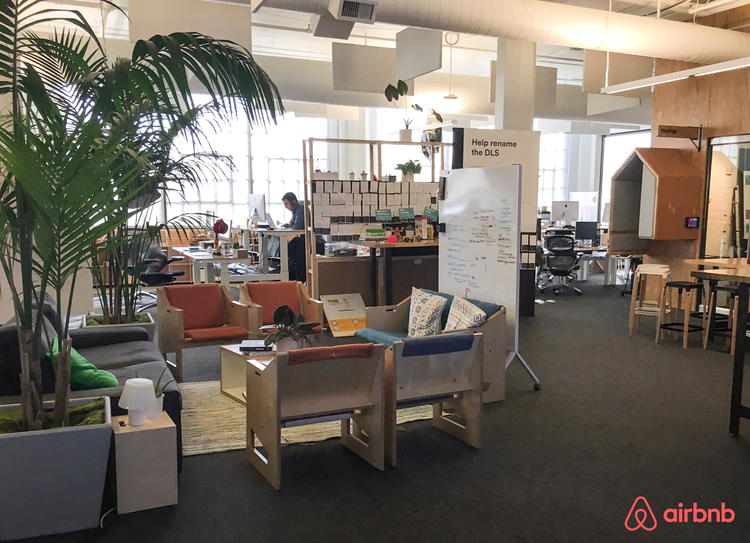
Airbnb’s culture is evident from the moment you walk into the five story building lobby where a kaleidoscope of windows from the building floors above gives glimpses into the conference rooms modeled after their listings from around the world. The main space is very bright and white so that the eye naturally travels to the very colorful conference and collaboration areas
and welcoming kitchens. Everything about the space says “hospitality”.

GitHub is a builder of web-based collaboration tools for software developers and as you walk through their space, you get the feeling you are walking through the many different environments around the world from which software developers might be accessing GitHub’s tools. As mentioned above, it feels like a conglomeration of co-working space, coffee houses, bars, libraries and living rooms.

Yelp was loud and fun. There were areas with loud music playing and the space could definitely be described as lively. (If you are a quiet introvert, it might not be the place for you.) Ripple’s space probably had the least distinct personality as it is an earlier stage tech company in the financial services industry. The feeling in their offices was definitely “hard-working start-up” – no fluff.

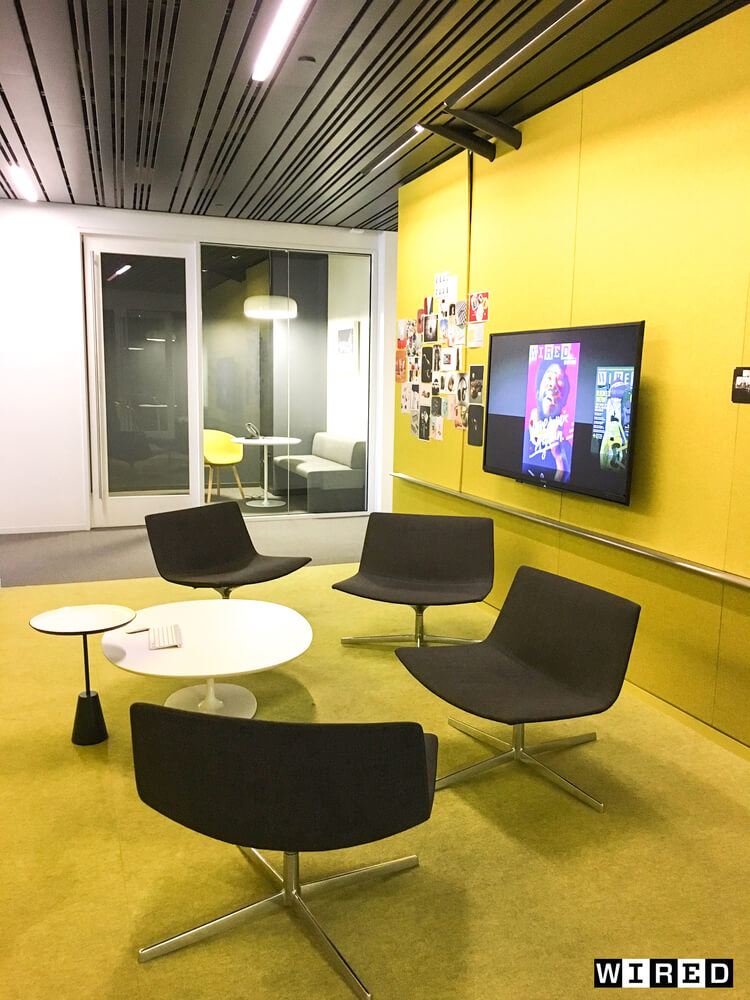
Wired has a partial dropped ceiling inspired by a circuit board that winds through and connects all of the space. It is also where all of the HVAC and electrical is hidden so that the remaining exposed ceiling is high and uncluttered.

While many of the innovations in office space seen on my trip to San Francisco will not be embraced elsewhere for some time, those spaces provide ideas for smaller scale innovation anywhere. Although the culture may be different in San Francisco and office space more expensive, businesses everywhere are trying to encourage collaboration, reduce their real estate footprints, become attractive to millennial workers and inspire their existing employees. How can we help you take the first step? I am happy to meet to go over my observations in more detail.
-

SF Tech Tour Part IV: Free Food, Bar Carts, Fitness Centers and Genius Bars!
I recently visited Yelp, GitHub, Ripple, Wired, Pandora, Airbnb, LinkedIn, and Pinterest. While each space had a very different look, some distinct themes emerged.
Amenities are important in work spaces for many reasons. They create and reflect culture, allow employees to spend more time doing their jobs and less time running out of the office and act as a powerful recruiting tool. Tech companies are clearly staunch advocates of highly amenitized space. In fact, I was absolutely blown away by the level of amenities offered to employees.
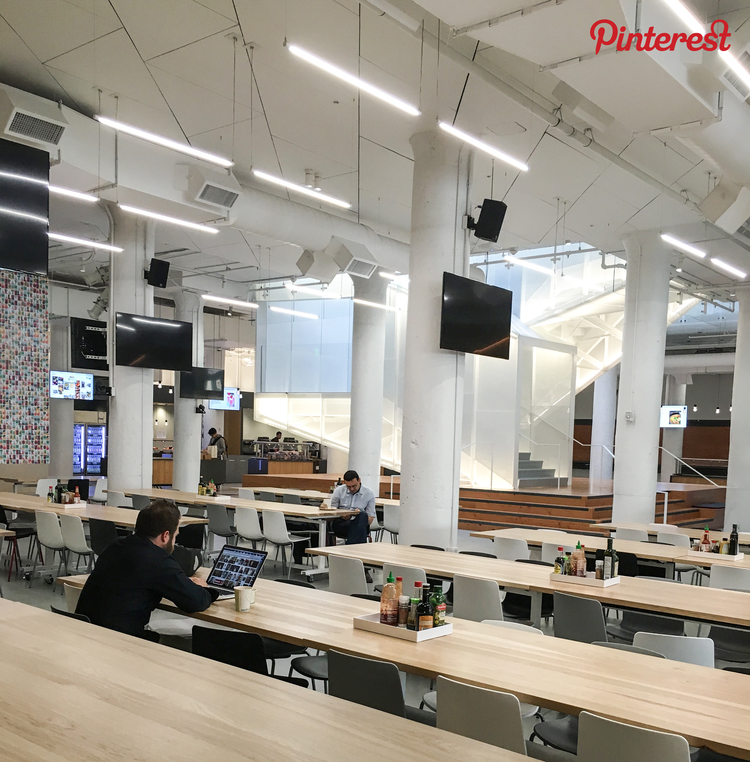
Pinterest’s Snack Bar The first company I toured was LinkedIn where I was told that the company provides full breakfast, lunch and dinner service to their employees every day free of charge. The rumored costs of this amenity? $7K per year per employee. And, Whole Foods has nothing on the LinkedIn kitchen. The ingredients are locally-sourced and organic and the choices limitless. If you happen to miss the actual meal times, you will have no one to blame but yourself for going hungry because each floor contains an abundantly stocked pantry.

LinkedIn’s Cafeteria I learned later when visiting Github, Pandora, Wired, Pinterest and Airbnb that this meal plan is standard. One of the Pinterest employees remarked to me on my tour that she hadn’t bought groceries in ten months. Even the relatively small Ripple brings in lunch for its employees twice a week.

Yelp’s Lobby If employees feel like imbibing, they don’t have to go far. Airbnb brews their own kombucha and keeps craft beers and local wines ON TAP in their café. Pinterest has a rolling bar cart that can be relocated around their space as the demand arises. GitHub has two bars in their space.

airbnb’s craft beer and wine selections All of the companies use their cafeteria and bar spaces for large company events, but most also have large auditoriums for the regular town hall meetings that are part of their cultures.

airbnb’s open cafeteria Lest the LinkedIn employees take excessive advantage of their cafeteria, their headquarters boasts a large wellness facility which includes cardio equipment, machines, free weights and a group fitness area offering an array of classes. There are trainers available to coach and employees are encouraged to use the facility at any time – even during their work day.

GitHub’s Open Conference Room A very San Francisco-specific amenity in every office and office building was bike storage. Many employees commute by bike so all spaces feature bike storage and most include shower facilities. Yelp took it to a new level with a “bike spa” where employees can repair or work on their bikes.

LinkedIn’s Bike Storage One of my favorite amenities found at both Pinterest and Airbnb was the Help Desk. Instead of burying the IT support staff in a back office, they are out at retail-like counter spaces where employees can find the help they need quickly and easily.

airbnb’s genius bar Linkedin also has tech vending machines on every floor where employees can swipe their badges to obtain things like a new mouse, a keyboard, a cable, etc.

LinkedIn’s Tech Vending Machine -

What we learned from in-house counsel at 32 AL companies

In order to gain a deeper understanding of the business of law so we can better advise our law firm clients and understand trends in the industry, my partner, Joe, and I surveyed general counsels and senior in-house lawyers located in Alabama about elements of their interactions with the law firms that assist them. After the survey results were in and analyzed, we met with ten of the 32 respondents in person to get further feedback from them on the survey questions. What we learned was invaluable – hopefully to our clients but also to us as service providers.
The responses to two questions were the most telling. First, we asked what factors contribute most to not rehiring outside counsel? Very few said that a key lawyer’s departure from their chosen outside firm would be reason enough to not rehire the firm. Surprisingly, expense was also rated as not as important. Rather, poor service and poor advice were the primary reasons for choosing new counsel.
Given this information, we asked GCs in our interviews if their outside counsel checked in with them regularly or surveyed them to determine if they were getting good service and advice from the law firm. They said “rarely”. A 2012 ALM survey echoed this response, finding that only 56% of law firm respondents reported that their firm has a plan in place to measure, track and build client satisfaction and loyalty.
The GCs we met with said they would welcome genuine inquiries from their law firms as to how matters and relationships were going. They were less interested in social lunch or dinners with outside counsel, not because they did not value those relationship, but their time was scarce and most would prefer to spend spare time on family or other personal interests. Rather, they said a well-thought out discussion on strengths, weaknesses and opportunities would be ideal.
They also said they would be very receptive to (but seldom received) inquiries from outside counsel as to how outside counsel could help them solve their business problems or as to whether there were other areas in which the law firms could assist the GCs. For instance, one GC suggested that outside counsel provide video learning modules in their practice areas for the company’s on-line employee university – gratis.
Participant Profile by Company Size
Secondly, in what turned out to be a natural follow on to this customer satisfaction discussion, we asked does your law firm understand your business? requesting responses on a scale of 1 to 10, 1 being “not at all” and 10 being “completely”. The average response was 6.5.
A 2012 ALM survey found similarly that 78% of law firms could not honestly say that their firm leaders were “extremely knowledgeable” about their top 20 clients’ businesses. Again, the GCs said this understanding could be easily increased with regular non-billable communication between GCs and outside counsel.To this end, in an effort to better understand their clients, one major SE law firm reduced their in-house continuing education budget and used the savings to pay their lawyers to go out and spend time with their clients, learning about their businesses. Fenwick & West provides monetary rewards to its attorneys for individual investments in learning new skills or pursuing innovations that can produce value for its clients.
Joe and I left these discussions asking ourselves whether we focused enough on understanding our clients’ businesses as well as measuring and improving client satisfaction. It quickly became apparent to us that what we were hearing was not limited to law firms, or even professional service firms but instead all companies. In a world where communication is via voicemail, email, texting and emojis, it is too easy to overlook the most important thing – one on one personal communication with clients to understand where they are and where they want to go.
We have put a plan in place to make sure we focus on understanding our clients and their needs and we have met with many of our law firm and other clients to share more of what we learned. We would be happy to share more with you and your firm or company. Please reach out!
-

SF Tech Tour Part III: Doesn’t everyone have a roof deck?
I recently visited Yelp, GitHub, Ripple, Wired, Pandora, Airbnb, LinkedIn, and Pinterest. While
each space had a very different look, some distinct themes emerged.We all know that fresh air and light make us happier and healthier but many workspaces are designed to keep us in stale indoor spaces. That is not the case in the offices I toured. GitHub’s LEED gold certified workspace boasts a roof deck with WiFi that was filled with GitHubbers the day I visited. It is also the locale of many after-hours social events for employees and/or clients.
GitHub’s Open Air Deck
LinkedIn and Ripple’s spaces also feature roof decks where employees are encouraged to work or meet at any time. LinkedIn’s first floor building lobby is a public open space – something unique to San Francisco. The walls to the street slide into pockets to allow an open air lobby where the public is welcome during business hours.
 Ripple’s Roof Deck
Airbnb’s space (also LEED gold certified) features a living wall in its five story lobby.
 Airbnb’s Living Wall
Yelp chose their 1920s era building for its unique Art Deco design as well as its operable windows.

Yelp’s San Francisco Art Deco Lobby
-

Can I get a witness?
Is a Lease in Alabama valid if the signatures are not witnessed?
In short, No.
I asked one of the talented lease lawyers I work with, Adam Sigman of Sirote & Permutt, this question recently and immediately received this reply:
Alabama’s version of the Statute of Frauds provides that leases (except those with a term of one year or less) are void unless the agreement or a memorandum, setting out the consideration in writing, is signed by the party to be charged or that party’s authorized agent (Ala. Code § 8-9-2).
The signature(s) must be at the foot of the document and be attested by one witness or, where the party cannot write, by two witnesses (Ala. Code § 35-4-20). A proper acknowledgement by a notary public or other authorized officer satisfies the witness requirement (Ala. Code § 35-4-23).Also, per Adam, any lease for a term longer than twenty years (including renewal options) must be recorded to be valid.
Now, if you want to know what your remedies are if these requirements are not met, call your lawyer!
-

SF Tech Tour Part II: Everyone Needs a Quiet Space
From last week:
Progressive companies realize space not only reflects culture, it can change it. If one wants to understand what the future of office space looks like, it seems like a trip to San Francisco, the epicenter of the technology culture, would be a good place to start. That is why I found myself on a four-day whirlwind tour of eight technology company spaces this spring.
I visited Yelp, GitHub, Ripple, Wired, Pandora, Airbnb, LinkedIn, and Pinterest. While each space had a very different look, some distinct themes emerged.Part II:
Although all of these tech companies are completely open plan, they acknowledge the need for quiet or confidential meeting and work areas as well as open air or undefined environments. GitHub, for example, began as a company with employees writing code in bars, coffee shops and home offices. In an effort to be true to and reflective of that culture, they designed their space to provide a variety of environments to accommodate different personal work styles. Their space features two full bar areas, a library, a “speakeasy” accessed through a hidden door in the library (which the employees told me is the most-used conference room at GitHub), coder caves and some simpler conference rooms.

Github’s Speakeasy

Airbnb’s San Francisco Living Room
Airbnb translated their most popular listings around the globe into actual meeting rooms and communal spaces. There are tents, Japanese tea rooms, Parisian kitchens, San Francisco living rooms… even an Airstream trailer. The space also features a movie theater-inspired boardroom with theater seating (rather than a boardroom table) in keeping with their non-hierarchical culture.

Airbnb’s Parisian Kitchen

Airbnb’s Japanese Tea room
Ripple has medium and large conference rooms with glass walls for transparency, all named after famous economists. Similarly, they have “phone booths” with glass walls named after female economists.

Ripple’s Phone Booths
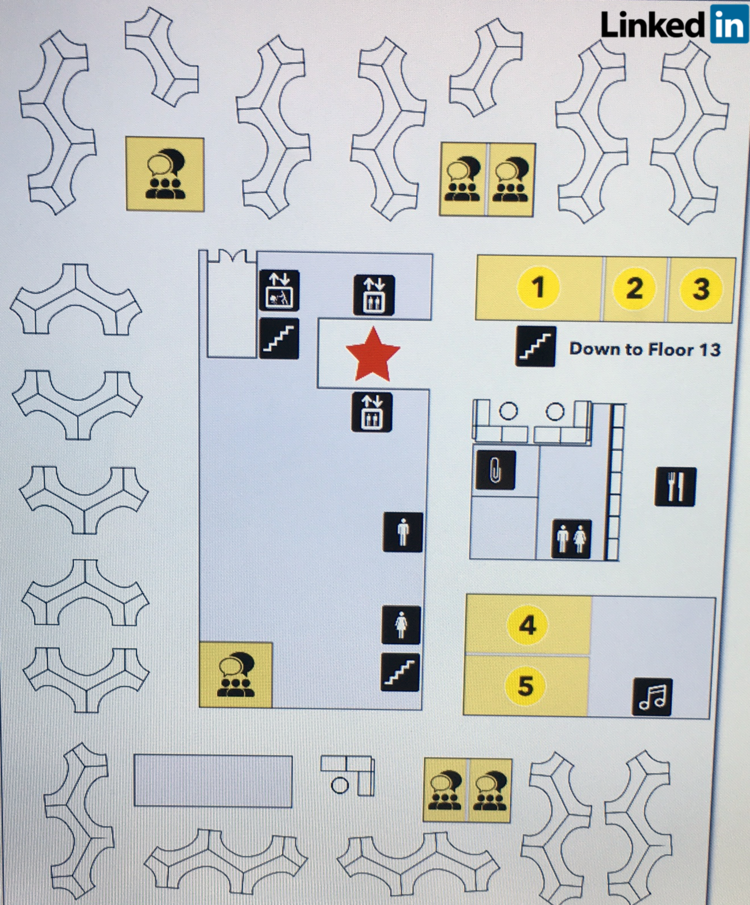
LinkedIn has conference rooms of various sizes sprinkled throughout their floors, given quirky names after themes such as the Pillow Room seen here. Many feature teleconference technology.

LinkedIN’s Pillow Room
Wired has open and closed conference spaces. For instance, the slime room has two walls but is open to the hallways on either side. The entrance to Wired’s space features a very large open area with huge reconfigurable sectionals as well as large glass walled offices with Nana-walls that can collapse when the magazine hosts large events. Their library is a sacred “quiet zone” where all know that noise is not welcome. The beanbag room, on the other hand, features a video game console and is rarely quiet.

Wired’s Bean Bag Room
Pinterest has large open spaces with comfy sectionals as well as conference rooms with curtains so that employees can choose the workspace most conducive to their tasks. They even have a Quiet Room with bunk beds in case you just can’t face your task without a nap! There is a crafting area as well as this is Pinterest.

Pinterest’s Conference Room

Pinterest’s Quiet Room
-
SF Tech Tour Part I: Open Plan is the Only Plan
Progressive companies realize space not only reflects culture, it can change it. If one wants to understand what the future of office space looks like, it seems like a trip to San Francisco, the epicenter of the technology culture, would be a good place to start. That is why I found myself on a four-day whirlwind tour of eight technology company spaces this spring. I visited Yelp, GitHub, Ripple, Wired, Pandora, Airbnb, LinkedIn, and Pinterest. While each space had a very different look, some distinct themes emerged.
OPEN PLAN
The first thing I noticed was an absolute lack of private offices. Only Wired (which had only six in its entire space) had any private offices. Other than Wired, Not. A. One. Not only that, there were no private cubicles. EVERYONE sits at bench seating. Some are configured in honeycombs; some in straight lines. Regardless of the configuration, the message is clear: collaboration is king and hierarchies are dead.
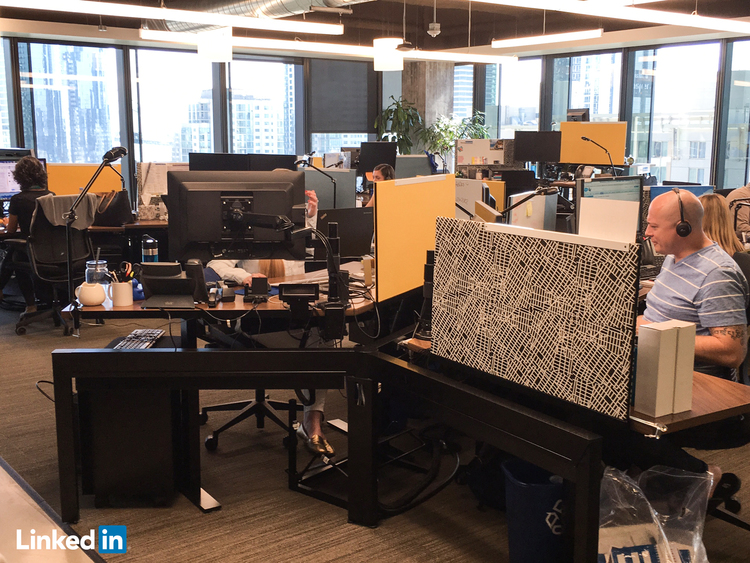
Further evidence of this message is Airbnb’s “executive triangle”. In this open area, Airbnb’s founders will often meet for high level discussions. As you can see from the photo below, even this space is not “private”.
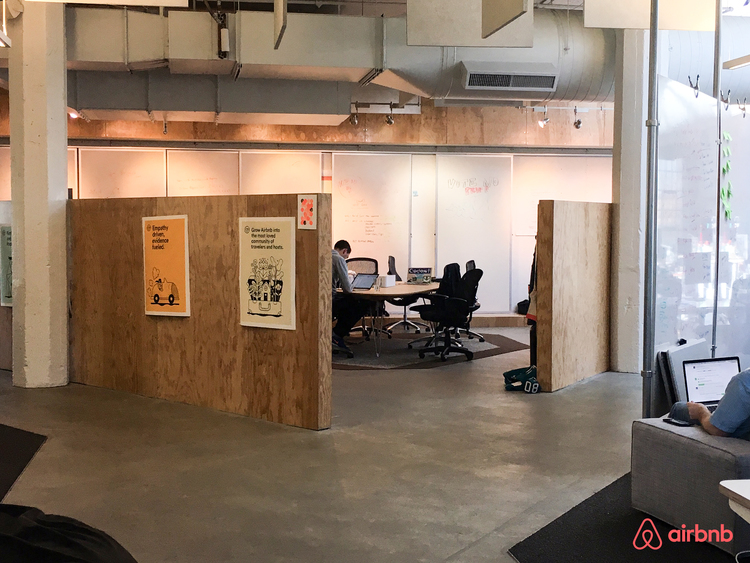
When asked why open plan is the preference, each company made it clear that saving space (and rent overhead) was not the primary goal (although most occupy to a density of 6:1,000 sf). Rather, they wanted to encourage teamwork, and have flexibility to grow and reorganize as teams/projects change. GitHubbers have total freedom to self-assign their work spaces. Some never sit in a workstation instead choosing to float about while others take up residence.
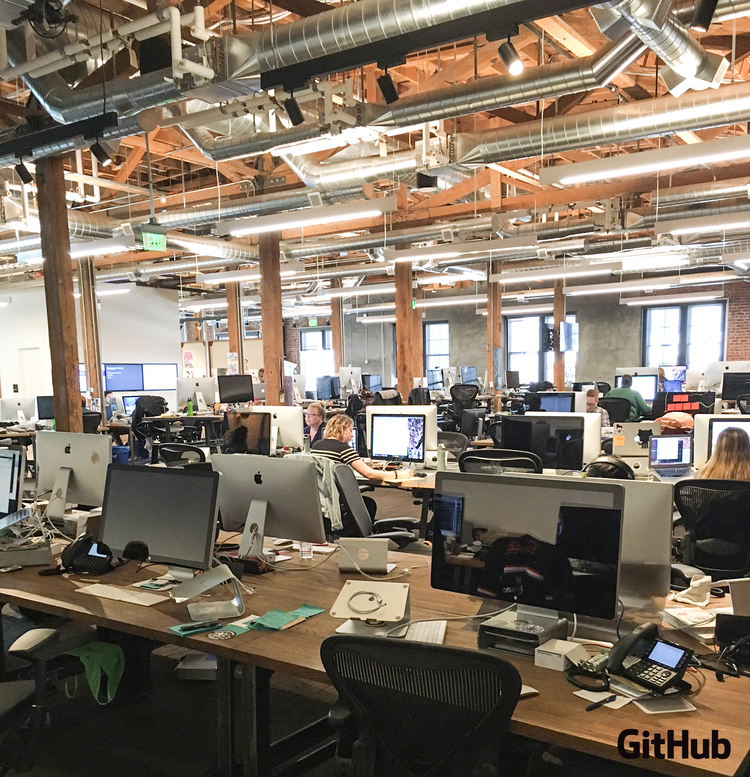
All of the furniture in each of these offices is standardized and exactly the same size. Most of the companies had purchased adjustable height furniture reflective of the wellness focus also seen throughout these companies.
Another stand-out characteristic of all of these tech spaces? With the exception of LinkedIn, none of them have a large mechanical building core. Because most are repurposed warehouse spaces, large center areas for storing goods were a key element of the buildings’ original designs and the core was placed on the perimeter. For tech companies, the big central open spaces allow for people to be at the center. Everything is open and everyone feels connected. Come back to the blog next week for Part II: Conference & Quiet Rooms.
-
Is 120 SF per office too small for attorneys? Littler Mendelson’s experience says “No”
I recently had the opportunity to travel to San Francisco to learn about what progressive technology companies are doing with office design. While there, I had the good fortune to also visit the brand new Gensler-designed offices of labor and employment law firm, Littler Mendelson. It was a fantastic experience as Littler proved to be on the cutting edge of space design and utilization for American law firms.
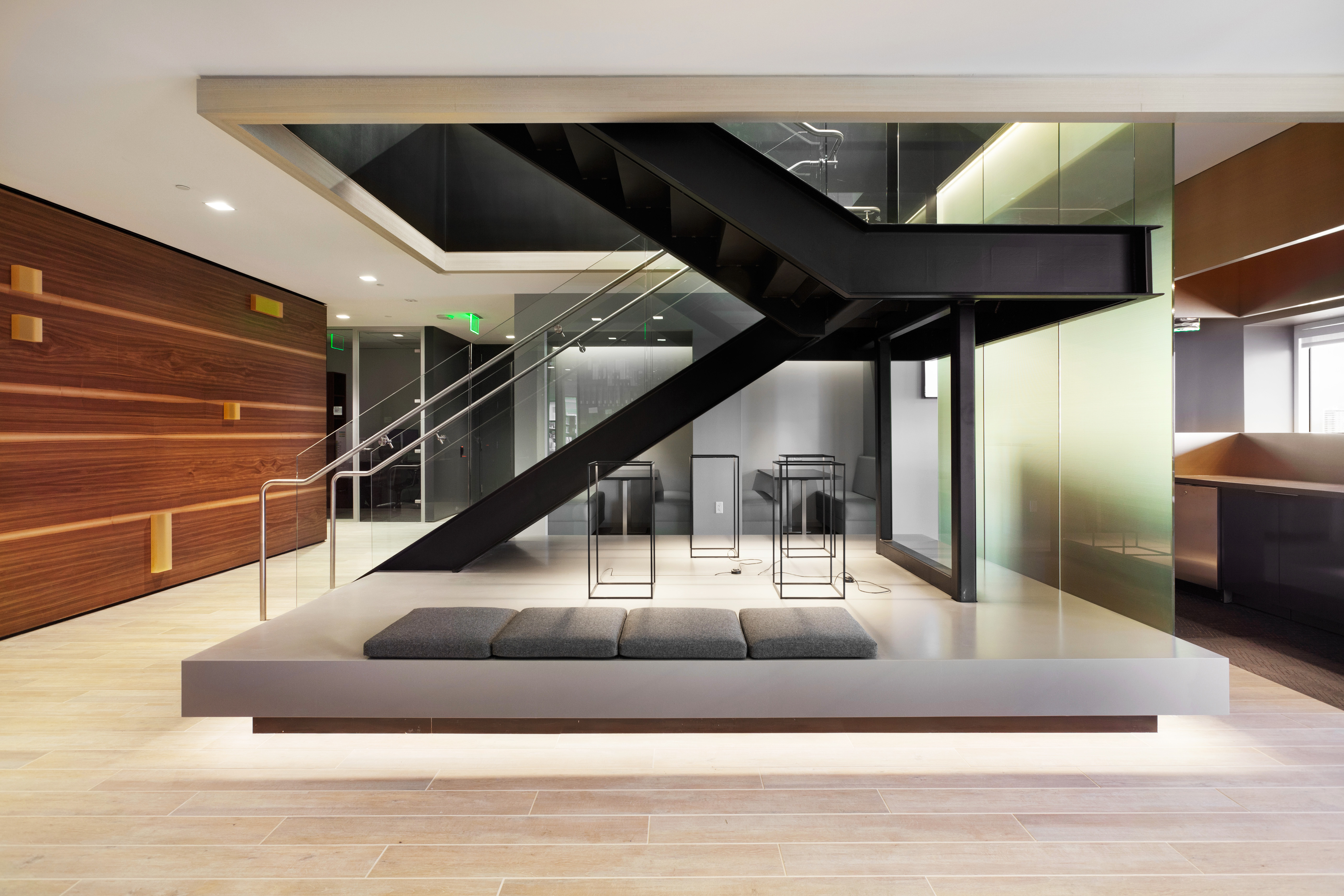
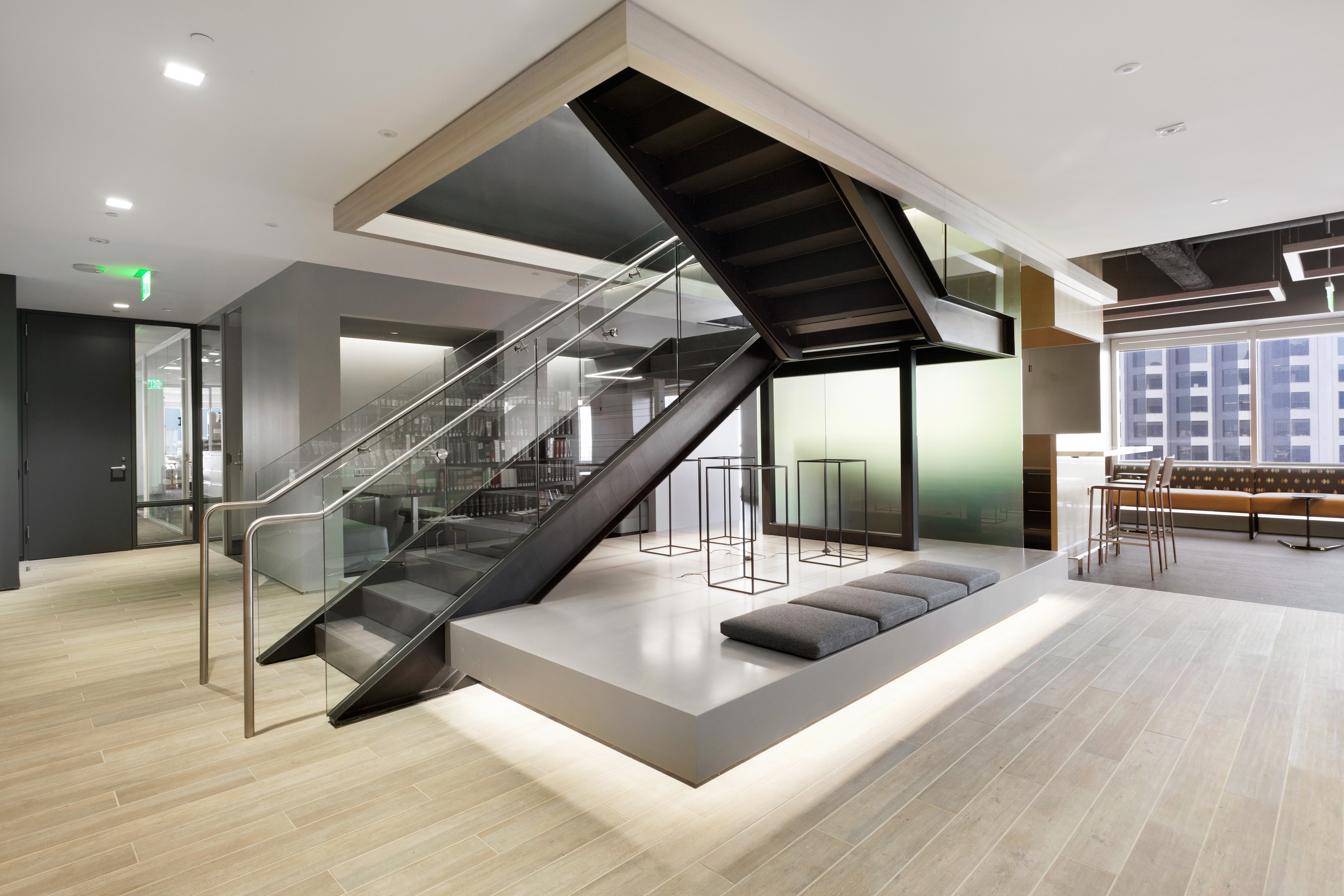 Walking into Littler’s office, the aesthetic is spa-like and calm. Warm natural woods, soft lighting and subtle earth tones are used throughout the lobby. There is abundant and varied seating – everything from high tables to comfortable window seats. On one side of the lobby, there is a large reconfigurable conference room with a collapsible glass wall so that it can be opened up to the lobby for client events.
Because Littler’s San Francisco office occupies two floors, the firm installed an interior staircase to encourage travel between the floors. The staircase was designed as a focal point of the lobby area and opens on the floor below to the firm “library” and the employee lounge/kitchen/break area. The office administrator said that the intention was to be able to use both floors together to host client events.
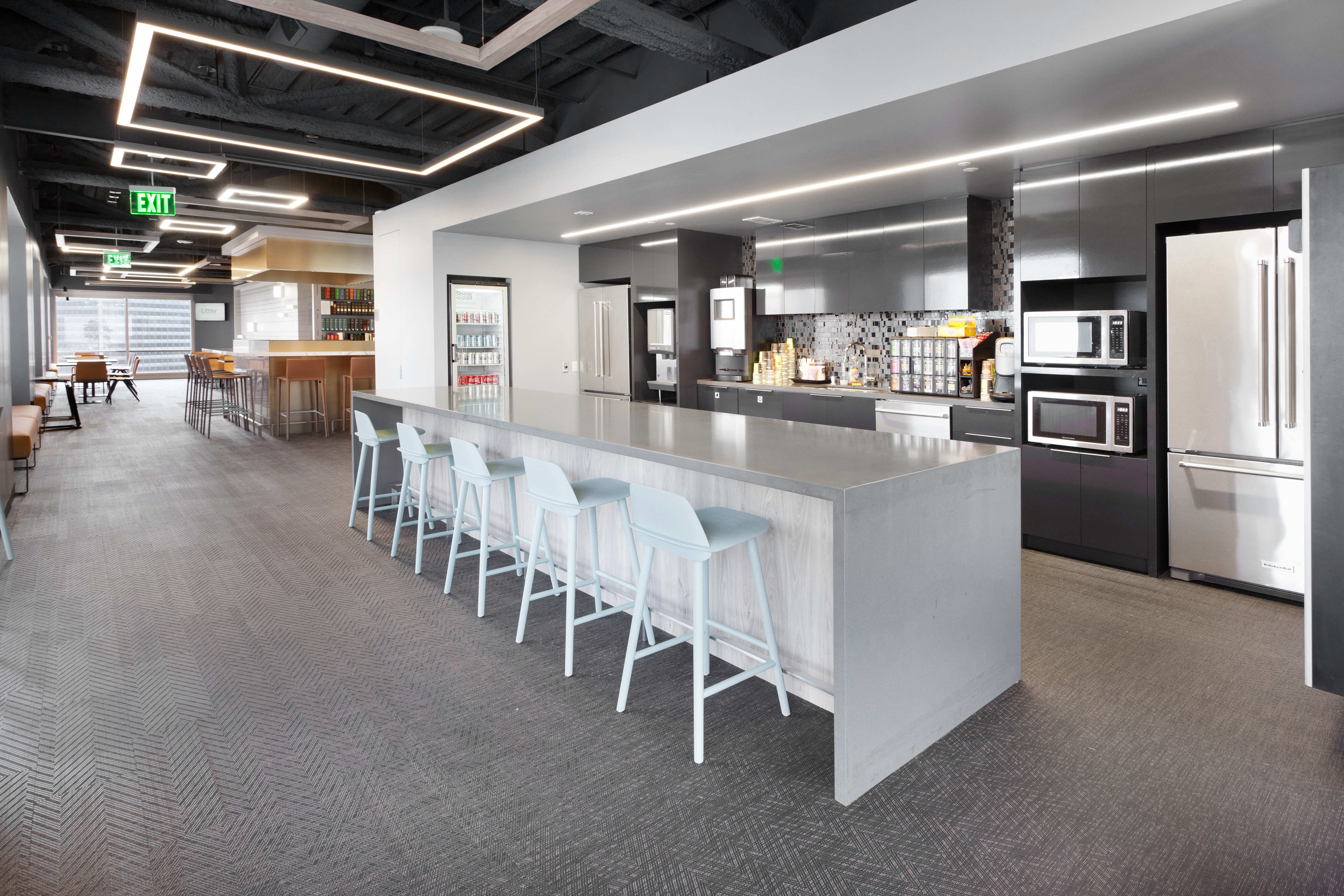
Because they wanted the employee break area to be well-utilized, Littler placed it on the building corner so that two full sides were floor to ceiling windows. The space also features a full kitchen with vending machines and a high-end espresso maker.
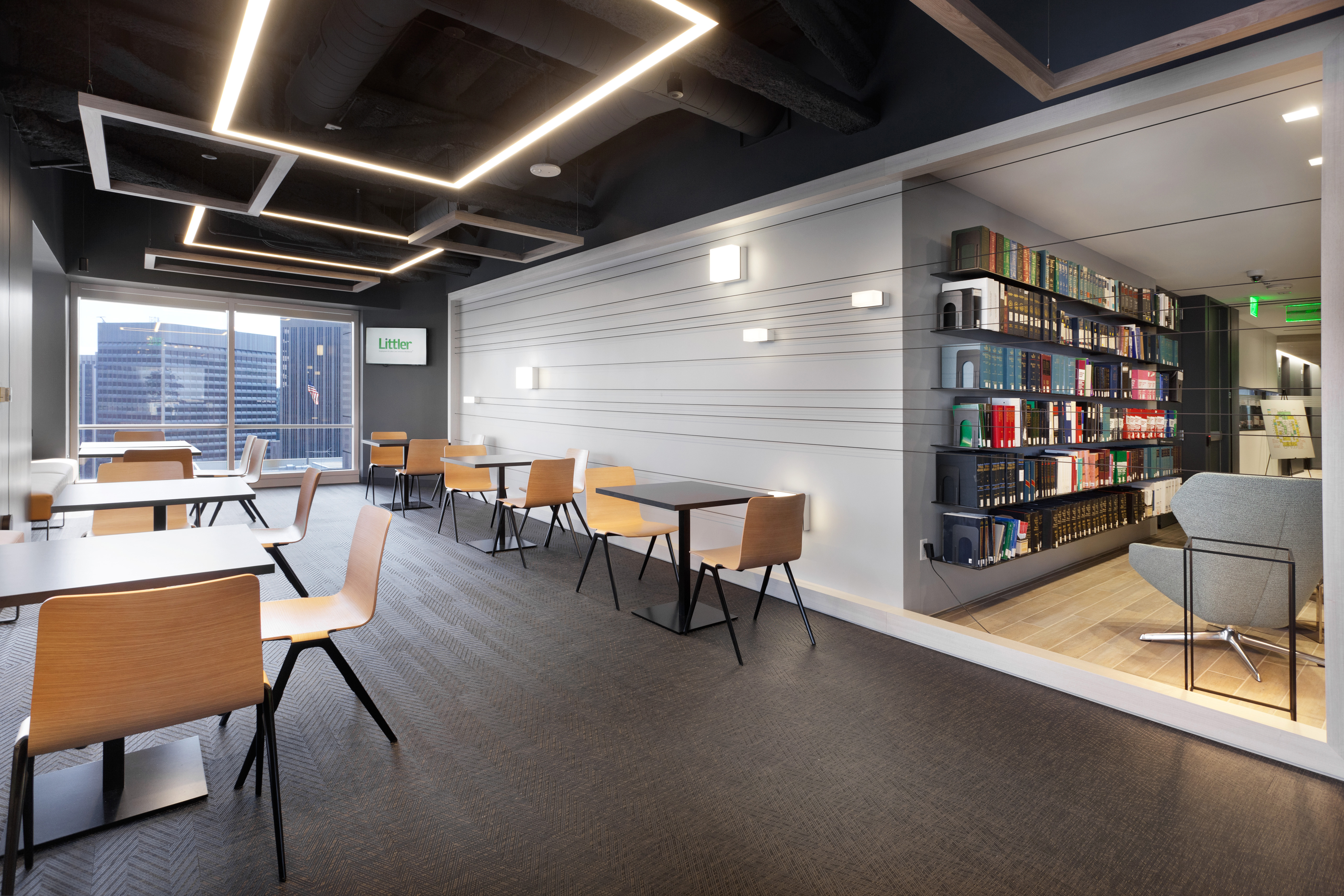
 Recently, Littler determined they would be better served by consolidating their library services at their headquarters in Kansas City as research is now done almost exclusively on-line. Consequently, the San Francisco library, which is adjacent to the employee break room, consists only of five long floating shelves and two comfortable chairs. Spare, but very inviting
 In the non-public facing areas of its offices, Littler adopted a standard ~120 square foot office for its attorneys. Partners and some associates are in glass-walled offices on the perimeter; some second and third year associates are on the interior but have glass walls so as to have access to daylight from the perimeter; and first year associates are in workstations. Standard built-in furniture makes the offices efficient and functional and saves the firm space. In an effort to encourage paperless offices (or “less paper” offices), each attorney is limited to three file drawers.
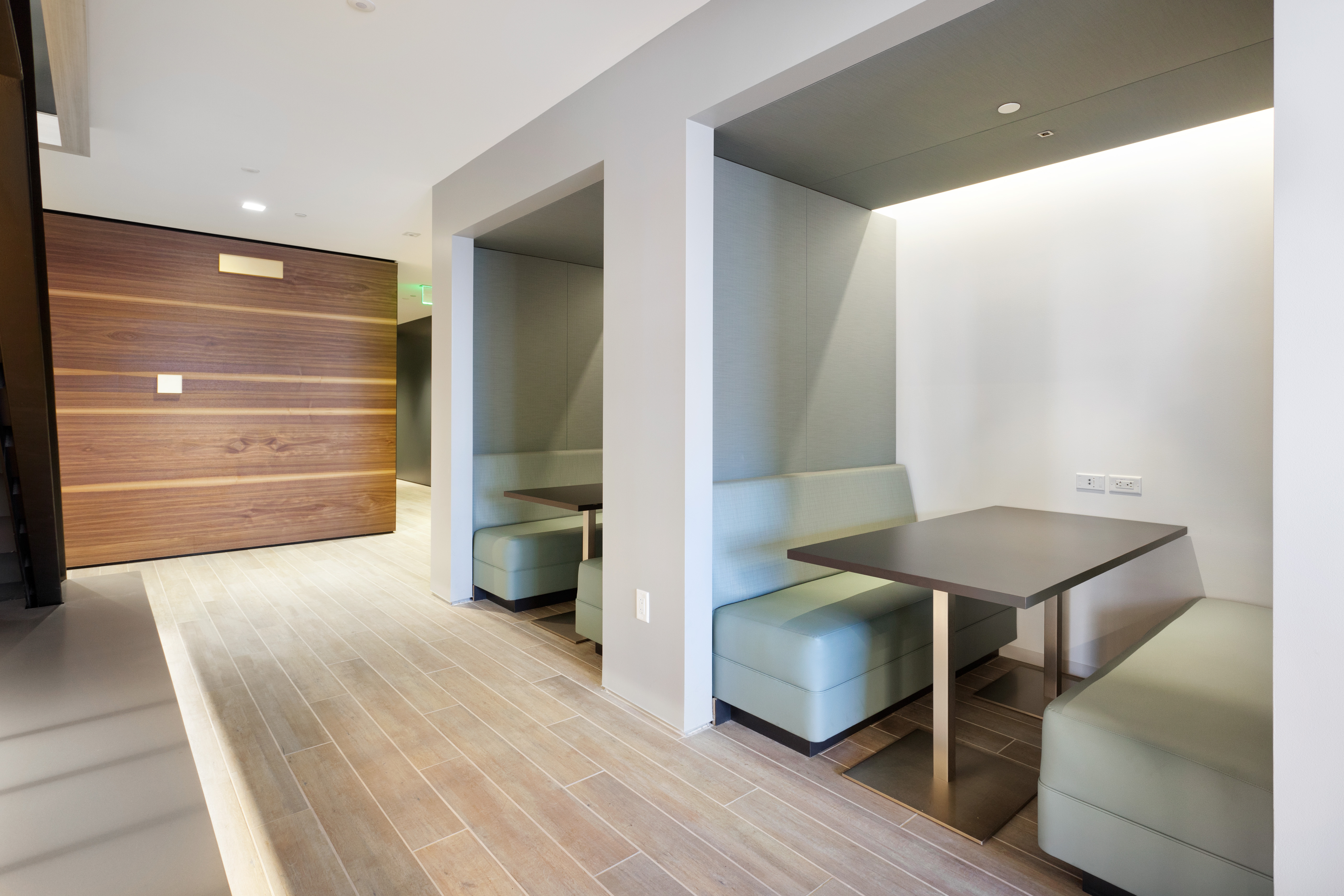
Because attorney offices were not designed to accommodate client visits, there are abundant conference rooms as well as some small hoteling rooms for visiting attorneys. Per the office administrator, the “living room” (designed to make visitors as comfortable as possible especially when in the office for witness or trial prep) is the most in demand conference room in the entire office. Booths are also a very popular destination.
 While they have only been in their new offices for a few months, the response from employees and clients alike has been overwhelmingly positive. And contrary to popular law firm fears, not one attorney has left the firm because their office was smaller and not one law firm grad turned down a Littler offer because they would have to work in a workstation for one year. Instead, the experiment in open and collaborative space seems to be working well.
-

Do we really want below market real estate lease renewal options given the new FASB rules?

I would be happy to sit down and map out a process for documenting this for your clients. My initial thoughts are that you have to consider:
- What are the economic incentives to extend the lease or not opt to terminate?
- What are the client’s future commercial office needs (historic growth, projected growth, etc.)?
- Does this office space accommodate these future needs?
- Are there other trends or industry issues that might affect their needs?
– Based on the above (not meant to be all inclusive), does the office meet their future needs and are the economic incentives strong enough that they would lead one to believe that it is reasonably certain that an extension will be executed keeping in mind the high threshold criteria of meeting this requirement.
I think the standard was written in this way to provide for more wide use in various industries and situations.”
At Colliers Alabama, we are making an effort to get together with our clients after their accounting teams have had a chance to consider this issue themselves and come up with a go-forward approach to lease renewal options to ensure that we are getting them the flexibility they need without adversely affecting their financial statements. We know that it is important to them to stay in front of this and other industry issues so as not to be the recipients of unwelcome surprises.