Author: Anita Turner

  • Let the Light Shine Through… For Real

    Let the Light Shine Through… For Real

    You cannot put people in a crappy cubicle farm and hang signs that say “change the world.”  Absolutely nothing will change and those people’s desire to come to the office will diminish day by day.

    This wisdom was shared by Shopify founder Tobi Lutke on the Knowledge Project podcast last week when the podcast host asked Lutke about Shopify’s offices.  Lutke said he thinks it is valuable to have his employees working in a place full of great design.  Or, as Deion Sanders once put it, “If you look good, you feel good. If you feel good, you play good. If you play good, they pay good.”

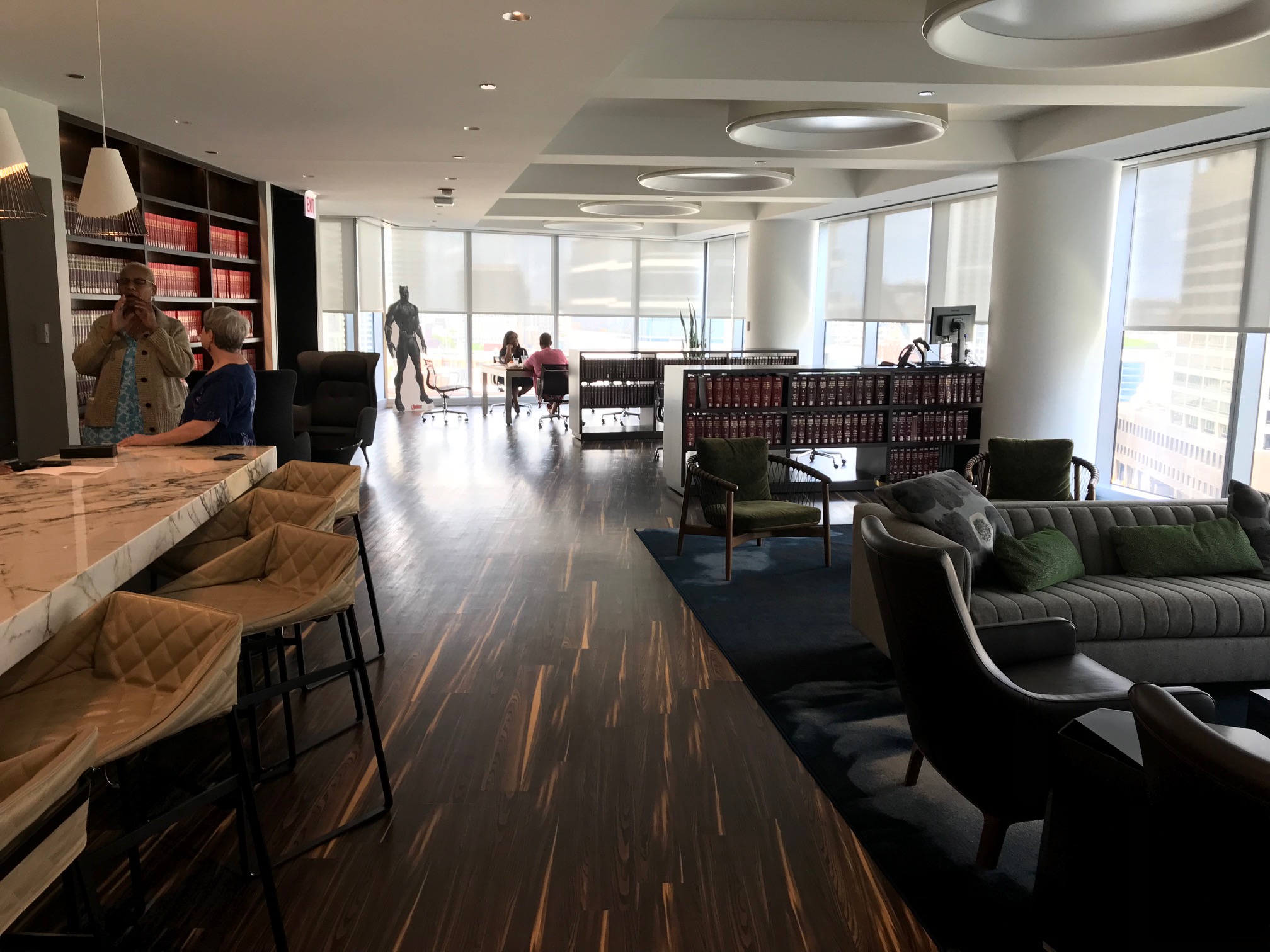
    Atlas RFID’s Interior Space

    Lutke put into words something that I have been emphasizing with clients a lot lately.  It seems that frequently when a company or firm is considering moving offices or refurbishing space, the decision makers are occupants of exterior offices.  Their biggest concern is commonly the happiness of the other occupants of external offices.

    Usually unintentionally, they forget to think about the experience of the people occupying interior spaces – the parts of the office that are often deprived of natural light.  These spaces many times are, at best, generic and, at worst, dated and soul-crushing in design.

    Photostock image literally labeled “depressing work space”

    What I believe Lutke is saying is that if you put people in space with great design, it sends a message to those people that they are valued and the company expects great things of them.  By contrast, if you put them in a “crappy cubicle farm,” you risk sending the message that their jobs are unimportant and further risk those people internalizing that message.  Like almost everything else in life, you get in what you put out.

    Is this the message you want your work space to send to your employees?

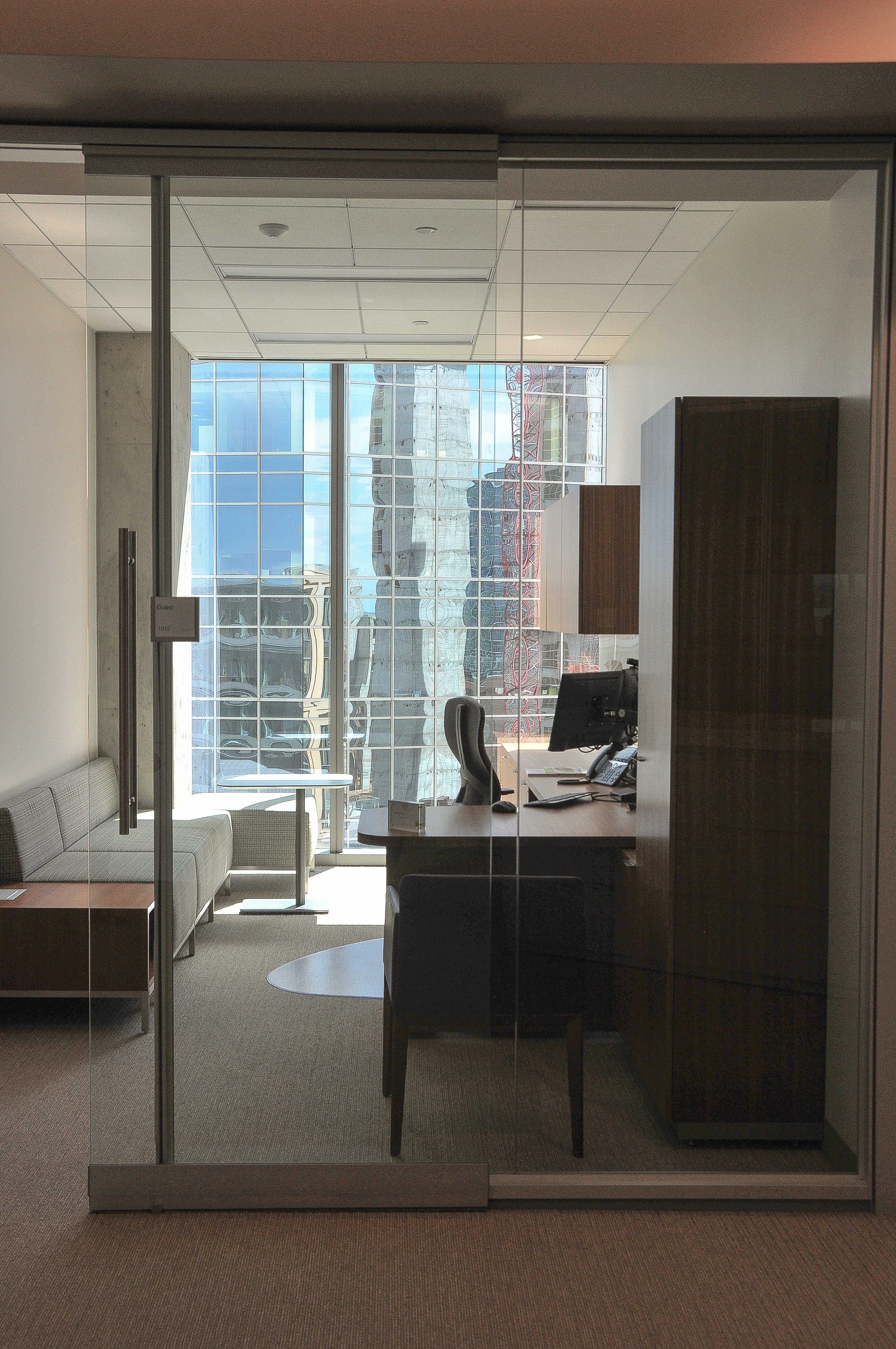
    This doesn’t mean you have to spend a ton of money on space.  It does mean that you have to give thought to the workplace experience of each employee.  For instance, putting glass walls on exterior offices not only provides an open approachable feeling to the exterior offices; it also allows natural light to filter to the interior of the space to the benefit of the people working there.

    Inspirato Denver

    Per Harvard Business Review, a survey of 1,614 North American employees found that natural light is the most craved workplace attribute.  “47% of employees admit they feel tired or very tired from the absence of natural light or a window at their office, and 43% report feeling gloomy because of the lack of light.”[i]

    I occasionally hear an exterior office occupant lament the perceived loss of privacy associated with glass walls or sidelites.  I suggest that their loss of privacy needs to be weighed against the general well-being and productivity of the interior office occupants.  Could a frosted strip on the glass restore a level of privacy while not jeopardizing the benefits of natural light?  Jackpot!

    Hogan Lovells Denver

    Other tactics for improving all space: plants, comfortable soft seating areas, and well stocked kitchens and break rooms.  Include these concepts and send a message to all of your employees that you value them and the contribution you know they can make to your company.  They will probably perform, if not exceed, expectations.

    Molson Coors

    [i] “The #1 Office Perk? Natural Light” by Jeanne C. Meister.  Harvard Business Review.  January 3, 2018.

  • The Most Popular Room in Our Office

    The Most Popular Room in Our Office

    I sometimes spend half my workday in the what we call “The War Room” — the most used room in our office.  And with good reason.  It is the most functional and productive space I have ever had the opportunity to work in.

    The good news? It’s functionality is easily copied.  So here is the skinny on this magical, get sh*t done, space.

    The Scene

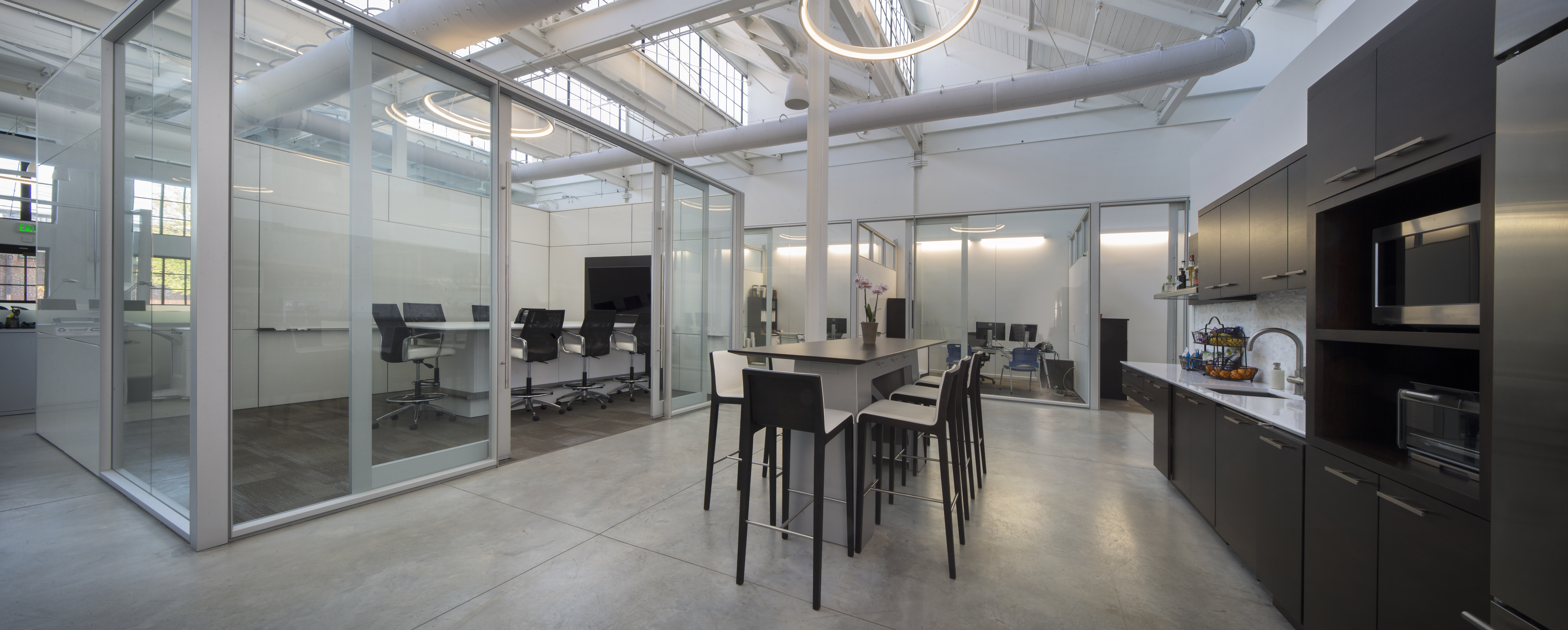
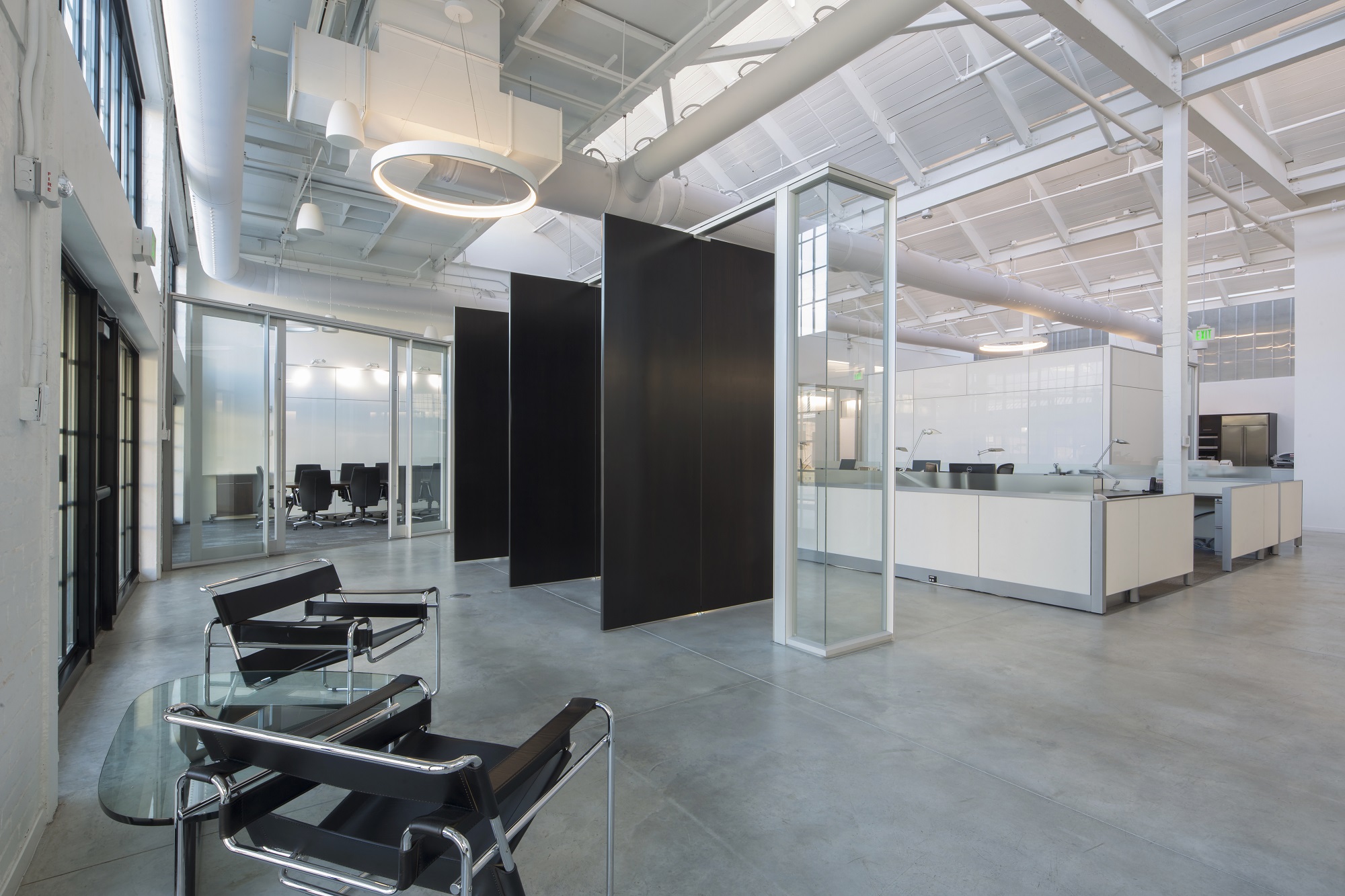
    Before I give you all the details, let me paint the picture of our office. Our office is located in a former bread factory that has been redeveloped into sleek, modern office space. The space is wide open with offices that are only defined by glass front DIRTT walls and no ceilings. It is open, inviting and everything you want modern office space to be.

    Towards the rear of our office is the War Room. The room is built from DIRTT walls with floor to ceiling whiteboard writing surface on 3 of the 4 walls and sliding glass doors flanked with glass on the 4th wall. The glass doors open out to our office kitchen and bar area.

    Inside the room is a long rectangular table, flush against one wall, that seats 7 people comfortably.  The table is counter height with tele-data hidden underneath. High swivel chairs surround the table, each chair featuring a foot rest for comfort. Above the table is a 60” tech-connected presentation screen (that acts as a widescreen during the Final 4 every year).

    The Vital Ingredient

    So, what makes this all so magical?  Probably the most important feature is the tech-connected screen.  It allows us to quickly, and easily, share screens to discuss development plans, review numbers and go through agendas in real time and update accordingly. Imagine – you are meeting internally to discuss status on all developments. One person shares their laptop screen with the meeting’s agenda pulled up, and takes notes on the agenda as the meeting progresses.

    None of this would be possible if our culture did not emphasize technological connectivity so greatly.  Everyone in the office has a laptop and all of us are encouraged/expected to be able to quickly share our screens when the need presents itself.

    The size of the screen relative to the room is also key.  It is large enough that it can easily be seen from any seat at the table.  Further, because the screen occupies one end of the table, no one is ever sitting with their back to the screen.

    Stand Up

    If you have been at your desk all day and need a break from sitting, the table is conveniently standing height.  This table height also somehow makes the room feel more like a workroom and less like a conference room.  As conference rooms are – at least for me – often associated with boring and soul-crushing meetings, this is a big plus.

    Because we try to schedule large blocks of time for productive “heads down” work, we sometimes have two or three project meetings back to back on “meeting days.”  On those days, it is incredibly convenient to have a fully-stocked kitchen with snacks and drinks right outside the War Room so that we can easily get what we need without missing a beat.

    The Formula

    How can you create your own magically productive conference room?  Include the following:

    • Large wall-mounted, tech-connected screen and a culture that encourages/expects people to learn how to use it;
    • Stand-height table with counter height chairs to encourage sit or stand attendance;
    • Seating on three sides of the table. The fourth side of the table is flush with the wall; and
    • Easily accessible snacks, drinks, cocktails.  You decide.

    I would love to hear your stories about other super-functional spaces in your offices, so please email them to me!

  • What Does It Really Cost to Sublease Your Space?

    What Does It Really Cost to Sublease Your Space?

    Your company acquires a company in a city where you already have an office.  Your business model changes and you need less space than you once did.  You grow and need more space so you have to relocate.  Or, unfortunately, your business in a tertiary market dries up and you close that office.

    All of these scenarios can trigger the need to dispose of excess space.  If that space is leased and you do not have a termination option in your lease, you will need to consider subleasing it.

    I often have clients approach me about subleasing space for them – something I am happy to help them do.  I always spend time on the front end making sure they know the expenses associated with subleasing so that they have realistic recovery expectations.

    Rental Rate

    Because a subtenant is buying your remaining obligation, they are going to expect a discount off of your rental rate – even if that rate is already below market.  The size of the discount is often related to the term remaining on your lease.  Since relocating an existing office or opening an office is expensive,  a larger discount from market is expected on a shorter term.

    Commissions

    The landlord is responsible for paying both the landlord’s and the tenant’s brokers’ commissions.  This amount is market dependent but a good rule of thumb is to plan on paying 6% of the sublease value in total commissions.

    Downtime

    It takes time to find a tenant, negotiate a sublease, negotiate a consent with the master landlord[i], and do any construction/furniture installation required for move-in.  Downtime can easily range from three to 12+ months.

    Concessions

    Depending on your market, a tenant improvement allowance or free rent may be necessary incentives to induce a tenant to sublease your space.  If you do not want to come out of pocket for tenant improvements, be prepared to offer free rent in lieu of an allowance.

    Legal Fees

    You will incur legal fees to draft the sublease.  In addition, many leases require tenants to pay the legal fees incurred by the master landlord in reviewing the sublease and consent documents.  Plan on a minimum of $2,000.00 and know that these costs can skyrocket if your lease is large, your obligation is a longer term or the subtenant is difficult.

    Demising Costs

    If you are only subleasing a portion of your space, you will incur costs to physically separate that space from the space you intend to keep.  Those costs could be as small as building one wall or as large as separating an HVAC loop, relocating a server room or adding additional egress points.

    Is There Anything Left?

    In the spirt of “underpromise and overperform,” I advise clients to plan on a 50% recovery of their obligation through sublease.  Sometimes, depending on the market and the lease rate, we can do better.  But the costs add up – and now you know why.


    [i] Many leases give the master landlord 30 days to consent to a sublease once it has been executed by the subtenant and sublandlord.

  • Retirement Housing: Law Office Edition

    Retirement Housing: Law Office Edition

    The legal industry is unique compared to other industries in the United States in that — by law — only lawyers are allowed to hold an ownership interest in a law firm.  Also, unlike many other industries, the partners and shareholders (from here forward, “partners”) in these firms may spend decades at the same firm.  As a result, when partners retire, there is rarely a clean break or a date certain at which point they stop practicing and, therefore, coming into the office.  Rather, their practices often slowly taper off and they continue to come into the office to visit with their colleagues, discuss legal issues and help maintain client relationships.

    Some of these partners come in every day for a few hours; others come in once a week.  This can become an issue when law firms run out of office space and are either not able to find expansion space or not interested in paying additional rent for such expansion space to house “retired” employees.

    The Poll

    I polled several law firm leaders, both local and national, to understand how different firms are addressing this issue.

    The overarching response was that law firms value former partners but also need space for active partners.  As such, only a few firms allow retired/retiring partners to maintain their offices in their current locations (i.e. windows and/or corners) indefinitely.

    The Hoteling Approach

    Instead, the most common approach is for the retiring partners to surrender their offices when they sell their partnership interests.  The retiring partners are then usually told that they are welcome in the office at any time and, if they call ahead, management will try to ensure there is a vacant office available for their use during their visit.

    Interior Offices

    A few firms relocate retiring partners to interior offices, if available, when the partners anticipate being in the office on a regular basis.

    Riding Off Into the Sunset

    One firm takes a different approach: they reward their partners well for their last three years of service at the firm and incentivize them to transition their business to other members of the firm during this three year period.  Then, on retirement day, the firms urges the retiring partners to keep in touch socially but to go enjoy their retirement.  This firm operates under the belief that it is better for all parties if there is a clean break.

    The Lounge

    A few firms have built retired partners’ lounges.  These lounge spaces include desks, soft seating areas, access to secretarial support and occasionally even a bar.

    I am a fan of this approach.  Moreover, I think it can be improved upon by extending access to such ‘lounge’ to law firm alumni.  Imagine welcoming a former colleague who is now in-house at a corporation to hang out at your firm any time.  The lounge could be built near the reception area to allow easy but controlled visitor access — limiting access to the rest of the office where sensitive or privileged information might be visible to non-members.

    The Bottom Line

    It does not matter what industry we are discussing; no  business wants to pay for space that is not being utilized on a regular basis. Retiring partners and employees understand this, so work with them to determine the role they will play in your firm after their retirement and accommodate their space needs in a manner that supports the ongoing operations of your firm.

  • What is a “gross-up” and why should I care?

    What is a “gross-up” and why should I care?

    Have you ever read the following language in the operating expense section of a lease and wondered why it was there?

    “If, in the Base Year or any Expense Year, the Building is not 100% occupied, Expenses for such year shall be determined as if the Building had been 100% occupied throughout such year.”

    Wonder no more.  This is a “gross-up clause.”  It is included in a lease to ensure the landlord is fully reimbursed by a tenant for the operating expenses the tenant actually used.   If this is clear as mud to you, let me illustrate with an example.

    Example A: The Fully Occupied Building

    Tenant A leases 10,000 square feet in a 20,000 square foot building.  Tenant A’s proportionate share of the total operating expenses is 50% because they occupy 50% of the building.  If the other 10,000 square feet (or 50% of the building) is occupied by another tenant (Tenant B), operating expenses for the building are split 50/50 between the two tenants.  If total building operating expenses are $100,000, with each tenant paying 50% (or $50,000), the Landlord is being fully reimbursed for all expenses by the two tenants.

    Example B: The Partially Occupied Building (No Gross-up Clause)

    What happens if Tenant B moves out of the building?  The Landlord doesn’t have to clean the vacant space and may adjust the temperature setting on that half of the building to save money on electricity while it is unoccupied. Also, less electricity is being used because computers are not plugged in and lights do not need to be on all day.  So, in this instance, the total building operating expenses go down to $75,000.  Without a gross-up clause, Tenant A only has to pay 50% of the total (or $37,500).

    As you can see, without a gross-up clause, Tenant A is getting a windfall because we already know from Example A that it costs $50,000 to run Tenant A’s portion of the building.  The landlord is not only foregoing rent on the vacant half of the building, but also losing $12,500 in operating expense recovery from Tenant A.

    Example C: The Partially Occupied Building (Gross-up Clause)

    The tables can easily be turned with a gross-up clause. If the landlord grossed up all operating expenses, the landlord would calculate expenses by dividing $75,000 by 50% (the portion of the building occupied by Tenant A) to get to $150,000 for total building expenses.  Since we have already seen that the operating expenses for a fully occupied building are only $100,000, we can see that the gross-up results in an artificially inflated total.  Tenant A would be responsible for its proportionate share (50%) of this grossed up number (or $75,000) and the landlord would have a windfall because Tenant A would be paying all of the expenses for its own space and the vacant space.

    Moral of the story?

    Not having a gross-up clause can be detrimental to the landlord but grossing up all operating expenses is detrimental to the Tenant.

    So, how do you protect your client in a multi-tenant building?

    If you are representing a tenant in negotiating a new lease or are reviewing operating expense statements from a landlord on behalf of an existing tenant, make sure the lease allows for the gross up of variable expenses only.  Variable expenses are those that fluctuate based on occupancy such as utilities and janitorial.  Non-variable expenses include taxes and insurance.

    If only variable expenses are allowed to be grossed up, the net result should be a grossed-up number closer to the $100,000 in expenses actually incurred when the building was fully occupied.  After Tenant A pays its proportionate share of the grossed-up number, or $50,000, the landlord is responsible only for the balance of the actual expenses ($75,000 less Tenant A’s $50,000 reimbursement) or $25,000.00, a more equitable result.

    Not all leases start and end at the same time. Landlord’s plan for building vacancies; tenants should too.


  • The 2018 Law Firm C-Suite Study: Cognitive Diversity

    The 2018 Law Firm C-Suite Study: Cognitive Diversity

    A little over a year has passed since I published The Law Firm C-Suite Study, a project which examined the relationship between the existence of various C Suite positions and the profitability of a law firm.  In that study, I surveyed 128 AmLaw 200 law firms as to which C Suite positions they employed.  I then ran regressions on those responses against the self-reported revenue and profitability data collected by AmLaw.

    WHAT HAPPENED LAST YEAR

    The conclusion of last year’s report was that law firms run by a group of highly skilled professionals reporting to the shareholders of the firm generally enjoyed increased profitability as compared to firms that did not build out a C Suite. Note, this is correlation; not causation.

    The three positions that were found to be most directly tied to greater revenues were Chief Financial Officer, Chief HR/Recruiting Officer and Chief Technology/IT Officer.  Specifically, firms with a Chief Financial Officer reported an average of $350,000 higher profits per equity partner than firms without someone in that position.  Firms with Chief HR/Recruiting Officers reported an average of $356,000 higher PPEP than firms without someone in that position.  Finally, firms with a CIO/CTO reported an average of $209,000 higher PPEP than firms without someone in that position.

    I discuss various schools of thought on why this is the case in that paper.  [You can read it in its entirety here.]

    I decided it was time to refresh my research to determine (1) which of the 128 firms previously surveyed had since hired either CIO/CTOs or CFOs and (2) what percentage of all AmLaw200 firms currently employ these two positions.[i]

    First, with respect to the 128 firms surveyed last year, eight that did not have CFOs last year have since hired someone for that position.  Five firms that did not have CIO/CTOs have since hired someone for that position.

    As to what percentage of the entire AmLaw 200 currently employ someone in the CFO and CIO/CTO position, the 2017 data revealed the following:

    The data also indicated, solely with respect to the Chief Financial Officer position, a correlation between the existence of the position and higher PPEP.  Specifically, firms with a CFO averaged $228,492 higher PPEP than their counterparts without a CFO.  This year, the correlation between the existence of a CIO and higher PPEP was not meaningful, perhaps because such a high percentage of firms employ a CIO.

    NEW POSITIONS ADDED IN 2018

    Why did some firms add CFOs this year?

    To better understand why firms might have added the CFO position this year, I reached out to some experts in the legal C Suite recruiting world.

    Amanda K. Brady, Global Practice Leader for Major Lindsey & Africa’s Law Firm Management practice, and her team helped several AmLaw200 firms hire CFOs and CIOs over the past year.  I asked Brady specifically about firms that hired someone for one of these positions for the first time.

    Brady said that many firms have very capable and competent people in financial management roles who have occupied those roles for a significant period of time.  Traditionally, in such firms, that financial management role has been referred to as a Controller or Director of Finance/Accounting.   When these individuals eventually retire or move on to other positions, the firms will re-evaluate what the role should look like going forward and consider whether the title should evolve accordingly.

    Brady said that alternatively, some firms employ a Chief Operating Officer or Executive Director with a finance or accounting background to handle the responsibilities typical of a CFO.  Usually this is the case in firms with a managing partner or executive committee that takes on more of the operational and administrative responsibilities.  In those instances, when the COO leaves or the managing partner responsibility transitions to an individual who prefers a more strategic and less administrative role, a firm may hire a COO to handle firm operations and administration and add a CFO to handle financial management and strategy.

    Michael Shackelford, Managing Partner of legal C suite recruiting firm LRG, LLC, recently worked with a firm that was looking to replace a finance director who had left the firm.  This firm decided that the person they were looking for needed to be a strategic thinker: someone who could talk to both the firm’s lenders and the firm’s clients.  Consequently, they changed the responsibilities and corresponding title associated with the role to Chief Financial Officer.

    Why are firms adding CIO/CTOs?

    Per Shackelford, his company is seeing firms hiring CIOs/CTOs upon the realization that they need an individual to lead the firm’s technology strategy, not just to manage and ensure the continuous operation of existing technology.  While legal industry experience is not always a requirement, Shackelford said that legal industry experience is desirable because often firms want a candidate who knows what is happening on the cutting edge of legal technology and who understands the idiosyncrasies of the industry.

    Why are firms adding Chief Marketing/Business Development Officers?

    While I can’t correlate increases in PPEP to the CMO/CBDO position, it is inarguably a growing role in the legal industry as firms realize the benefits of developing sophisticated business development capabilities.  Calibrate Legal specializes in recruiting for legal marketing and business development positions as well as HR, recruiting and professional development roles.  I spoke with Jennifer Scalzi, Calibrate’s founder and CEO, about the trends she and her firm are seeing in recruiting for such positions.

    Scalzi says she has seen an uptick in searches for practice group directors.  She describes this role as a person who manages and develops client relationships and reports to the chair of a practice group.  Ropes & Gray and Cooley (among others) employ people in these roles.

    Scalzi said the individuals performing this practice group director function are often former practicing lawyers.  The practice director role frequently has an associated practice group marketing manager with whom the practice director works to formulate and execute on practice group business development strategy.

    Brady is also seeing an increase in the number of practice director positions across firms of all sizes.  As an example, she cites Kilpatrick Townsend which employs business people who report to practice chairs and function as practice group COOs.

    Similarly, per Chief Strategy Officer Mark Usellis, Davis Wright Tremaine supports all of its practice group chairs with practice group directors.  DWT’s practice group directors’ responsibilities include growing the practice groups’ businesses, saving lawyers time and helping the chairs do their jobs better.

    More Chief Talent Officers?

    Scalzi stated that as generations shift, firms are taking a close look at infrastructure and often consolidating HR, attorney recruiting and professional development responsibilities under a Chief Talent Officer.  This person is responsible for all of the people assets of the firm — both attorney and business staff.

    What other business roles are growing?

    Per Brady, there is a lot of conversation around pricing professionals and project management professionals, however, the greatest demand is for those individuals who have the skills to integrate pricing with project management.

    WHERE DO LAW FIRMS FIND THESE PEOPLE

    The majority of the ten+ COO searches Shackelford and LRG completed last year were necessitated by the retirement of a firm’s existing COO.  In all of these placements, the firms hired professionals with legal experience.

    Compare this to the searches Shackelford completed for Chief HR Officers, Recruiting Directors and Directors of Attorney Development.  For those positions, Shackelford said law firms consider and often prefer candidates from law schools or government.

    Brady and her team have placed candidates who hail from industries outside of legal in COO and CFO roles.  In those instances, the candidates were equipped with impressive technical skills and experience coupled with highly service-oriented backgrounds that translated well to the law firm environment.  For instance, MLA helped Davis Wright Tremaine hire former Providence Health Services CFO David Delafield to be DWT’s CFO.

    Scalzi says that 100% of her clients consider candidates outside of legal for the HR and marketing/BD roles for which Calibrate recruits, but few are ultimately willing to take the perceived “risk” of hiring such a candidate.

    Per Shackelford, in three CFO searches completed last year, two of the firms were willing to consider applicants from outside the legal industry, although professional service firm experience of some kind was a requirement.  That said, the candidates placed are almost always CPAs.

    FINAL THOUGHTS

    The most successful AmLaw 200 firms continue to be those that have evolved from being partner-run to being run by a group of highly-skilled professionals reporting the shareholders of the firm.  The data collected from my follow-up survey continues to indicate that this model is generally conducive to increased profitability for the firms that adapt it.

    My theory?

    Law firm that recruit professionals with diverse professionals backgrounds benefit from cognitive diversity: the inclusion of people who have different styles of problem-solving and can offer unique perspectives because they think differently.

    As someone who has been through both law school and business school, I can attest that business and law schools teach very different approaches to problem solving.  When law firms are run predominantly by attorneys, problems are generally being solved with a consistent approach and perspective.  This is not necessarily the best approach.  HBR backs me up on this.  Their recent study showed a significant correlation between high cognitive diversity and high performance.[ii]

    If your firm is not already contemplating professional management, maybe it’s worth considering.


    [i] Author note: While I would like to have looked at similar data for the Chief HR/Recruiting Officer and Chief Marketing Officer positions this year, I found that there was too great of a disparity in titles and responsibilities between firms to garner meaningful data.  For instance, some firms have a Chief Talent Officer, Chief HR Office, Chief Recruiting Officer and/or Chief Diversity Officer. Further, some firms use these positions to manage all employees – both business and professional, whereas others use these positions solely to manage attorneys.  A similar problem arises with Chief Marketing/Business Development/Client Service Officers.

    [ii] “Teams Solve Problems Faster When They’re More Cognitively Diverse.”  Reynolds, Alison and Lewis, David.  Harvard Business Review.  March 30,2017.
  • The Power of the Triad: LP Edition

    The Power of the Triad: LP Edition

    Last month, Levenfeld Pearlstein (“LP”) invited me to their annual LP Women’s Event, giving me a great excuse to visit Chicago. It was absolutely time and money well spent!

    The Why

    The purpose of LP’s Women’s Event is to connect LP’s clients and friends in a meaningful way.  This focus on connection is integral to LP’s culture.  In fact, their website says “Growing our network and making connections in and among our clients is one of LP’s top priorities.”  What a value-add proposition!

    I admit that although I love this firm, I was not sure if they could successfully pull this off –   connecting people while also running a profitable law firm is a tough thing to do. Could they really make it happen?

    [I should note that my initial skepticism was completely unjustified. In every experience I have had with LP, they have blown me away with their focus on service.]


    LP absolutely made the magic happen.

    The Invite

    The experience started with an invitation which read:

    “We believe only good things can happen when you put smart, talented, successful women in a room together.  Join us for this dinner party where the featured guests are you and many other brilliant women we know.”

    Per Andrea Maciejewski, the firm’s CMO, each LP female professional was asked to invite two women (clients or friends) who they thought would enjoy an evening of laughter and networking.  (While I am not a client of LP, they still befriended and invited me.)

    When I RSVP’d, I received a message that said “To help us better prepare for this event, tell us what you hope to accomplish this year.”

    Let me just lay this out for you: LP created a networking event to connect their clients and friends and then asked each guest what kind of connections would be most helpful to them.  Holy $h!t.

    The Event Itself.

    On May 31st, I showed up fifteen minutes late (Chicago traffic!) at a hip-looking, warehouse-y place and was greeted with a hug and a smile by Maciejewski.  Until that moment, we had only spoken on the phone, but she made me feel like an old friend.

    Maciejewski immediately introduced me to Deborah Knupp, Managing Director, (a.k.a. b@d@ss), for GrowthPlay, a law firm business development and client service consulting firm, because Maciejewski knows of my obsession with both subjects.  We chatted as other LP women mingled and introduced guests to each other.

    Connecting Is an Action

    Each introduction went something like this: (1) resume – who each woman works for, what they do and why they should meet and (2) kudos – telling each person what makes the other person great.

    This form of introductions is straight out of the well-known business book Tribal Leadership.  In Tribal Leadership, the authors tell the story of CBRE legend Darla Longo and how she is acclaimed for building “triad” relationships.

    Per the book, when you connect two of your contacts in a triad, they establish a relationship that no longer requires you to be involved.  Those individuals take the relationship beyond the point of interaction with you. Contrast this with a hub and spoke relationship where your presence as the hub is always necessary to connect the two spokes (your contacts).

    Triad Relationships
    Image by Better Humans


    Longo is apparently a master at triads and hosts an annual event much like LP’s where her sole purpose is connecting people with each other. In Longo’s instance, she “receives loyalty and followership by creating relationships between other people.”[i]

    “If you build the relationship between two people and then walk away, most of them will praise your efforts.  You’ve increased the respect you get by showing the same to other people.”[ii]

    [Side note: I was first introduced to Tribal Leadership by one of Longo’s colleagues, CBRE Managing Director Natalie Bazarevitsch, back in 2008 and have found that creating these triad relationships is infinitely rewarding, both personally and professionally.]

    Dinner

    The connecting activity continued into the dinner portion of the LP event where one of the female partners welcomed us with a short speech encouraging us to leave the event with at least one new friend and one new connection.  This really set the tone for a great evening.

    The Seating Plan

    All attendees were seated at preassigned tables, each of which included nine women: three LP ladies and six guests.

    It was clear from the table discussions that the LP table hosts had been provided with the table guests’ responses to the “what do you hope to accomplish” question from the RSVP.  All of the hosts went to great effort to ensure they were helping their guests meet people who might assist in each woman’s goals.

    Another subtle touch? To facilitate an exchange of business cards, LP gave each attendee a leather business card case embossed with “Empowered Women Empower Women.”

    The Net Result?

    A great night.  I laughed so hard my stomach hurt, empathized with other working moms, learned  new things, and made some new friends.  I think my LP hosts had to kick me out so they could all go home to their families.  (As my energy level peaks at about nine am, this is saying something.)

    Thank you, LP.  You put your time and money behind adding value to your clients and the connections made at this event are a great example of how you do it.  If you are a general counsel and you have not checked out this firm, do it!

    [i] Logan, David (David Coleman).  Tribal Leadership: Leveraging Natural Groups to Build a Thriving Organization.  Collins, 2008.  p. 184.

    [ii] Ibid. p. 190.

  • It’s the small things

    It’s the small things

    While in Chicago last week, I visited some cool new office spaces.  A highlight was the two-story space Gensler cut through the length of Latham & Watkins’ new offices to create an internal “Michigan Avenue” with a two-story conference center and a double height 60 foot long glass mosaic mural of the Chicago Exposition.  Another highlight was the river view from DLA Piper’s new offices.  The biggest impact, however, came from a few of the little things I saw.

    The KidZone

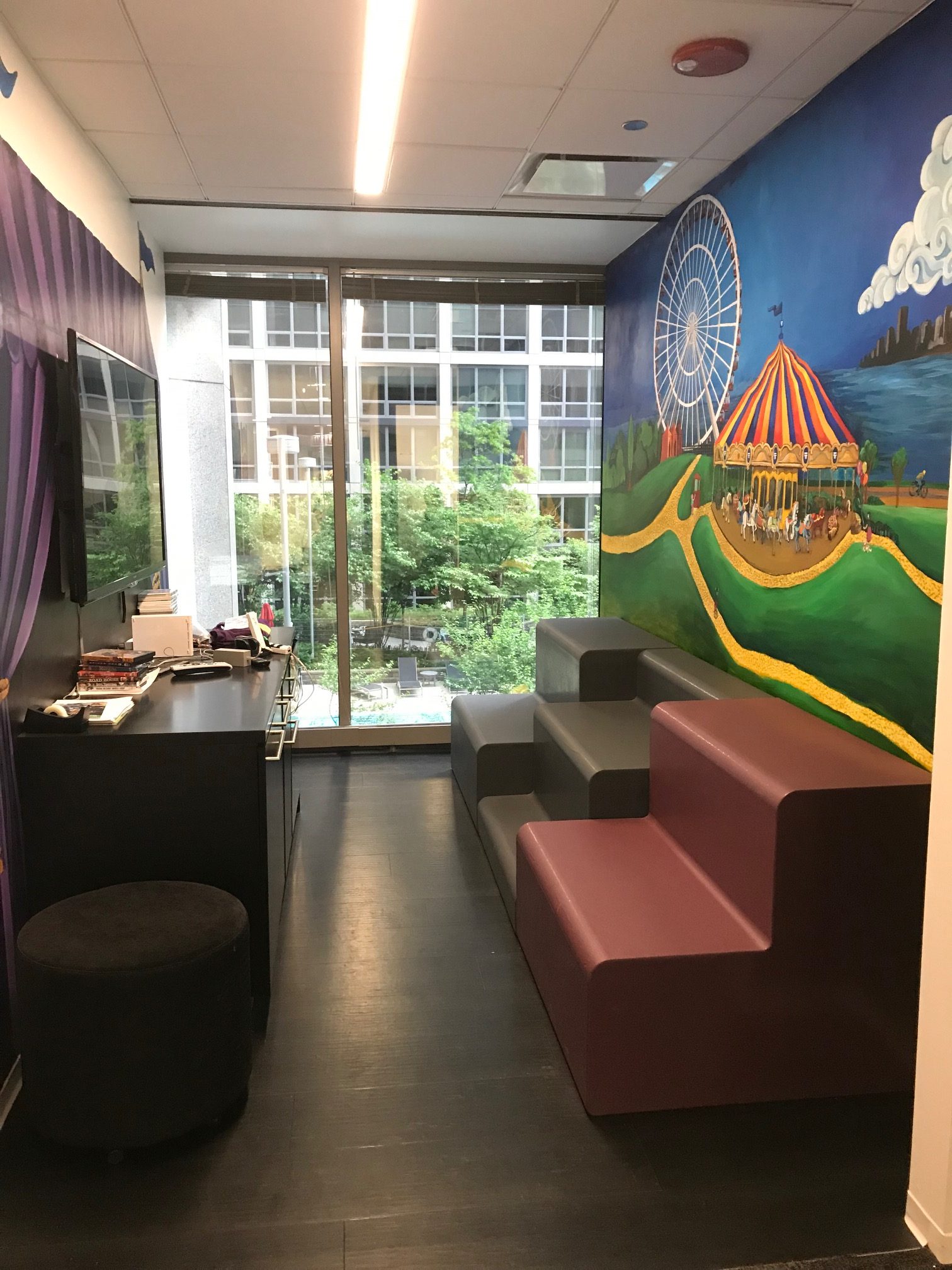
    The most innovative and brave design feature I saw was Transwestern’s KidZone.  While many companies talk a big game about work/life balance and being accommodating to working parents,  Transwestern did more than talk.  They took a small space (~80 square feet) and built multi-level seating, installed a flat screen TV, commissioned a mural, and built cabinets to store toys and books.

    Kid Zone
    Transwestern’s KidZone

    All of this was done for the children of Transwestern employees.  Transwestern’s management understands that there are times when you have to be at work for a meeting but your child has the day off school due to teacher workshops.  Or when daycare closes early but you can’t leave your office yet.  And they want to make sure their employees know that their children are welcome at the office when that is the situation.  This. Is. Brilliant.

    Clearly it is not ideal for parent or child to have to bring children to work.  But it happens.  And Transwestern is acknowledging this reality and empathizing with their employees and their families. If I were a recruiter for Transwestern, I would show this to every recruit I brought into the office.

    If I ran a law firm – especially one of AmLaw 200 size – I would build one of these in every office.  It might even help firms maintain a gender diverse workforce.

    Swag Cubbies

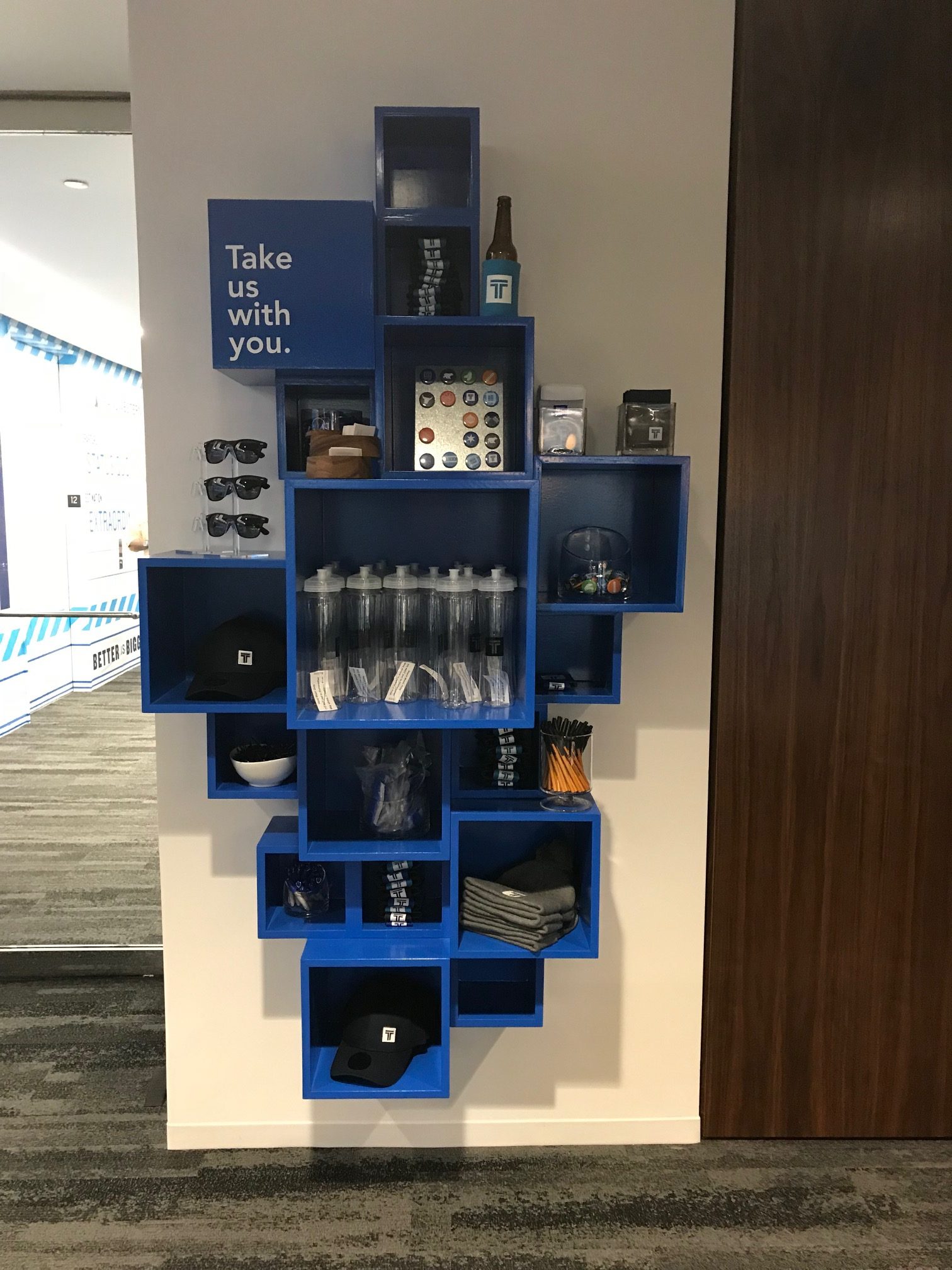
    Transwestern does some other cool things in their space as well.  Take this swag wall in their reception area.

    Swag CubbiesThe cubbies are stocked with fun takeaways like water bottles, stocking caps, and sunglasses.  Judging from my experience with my own children, my guess is that the swag wall sees it share of kiddy raids when the KidZone is in use.
    A Fireplace

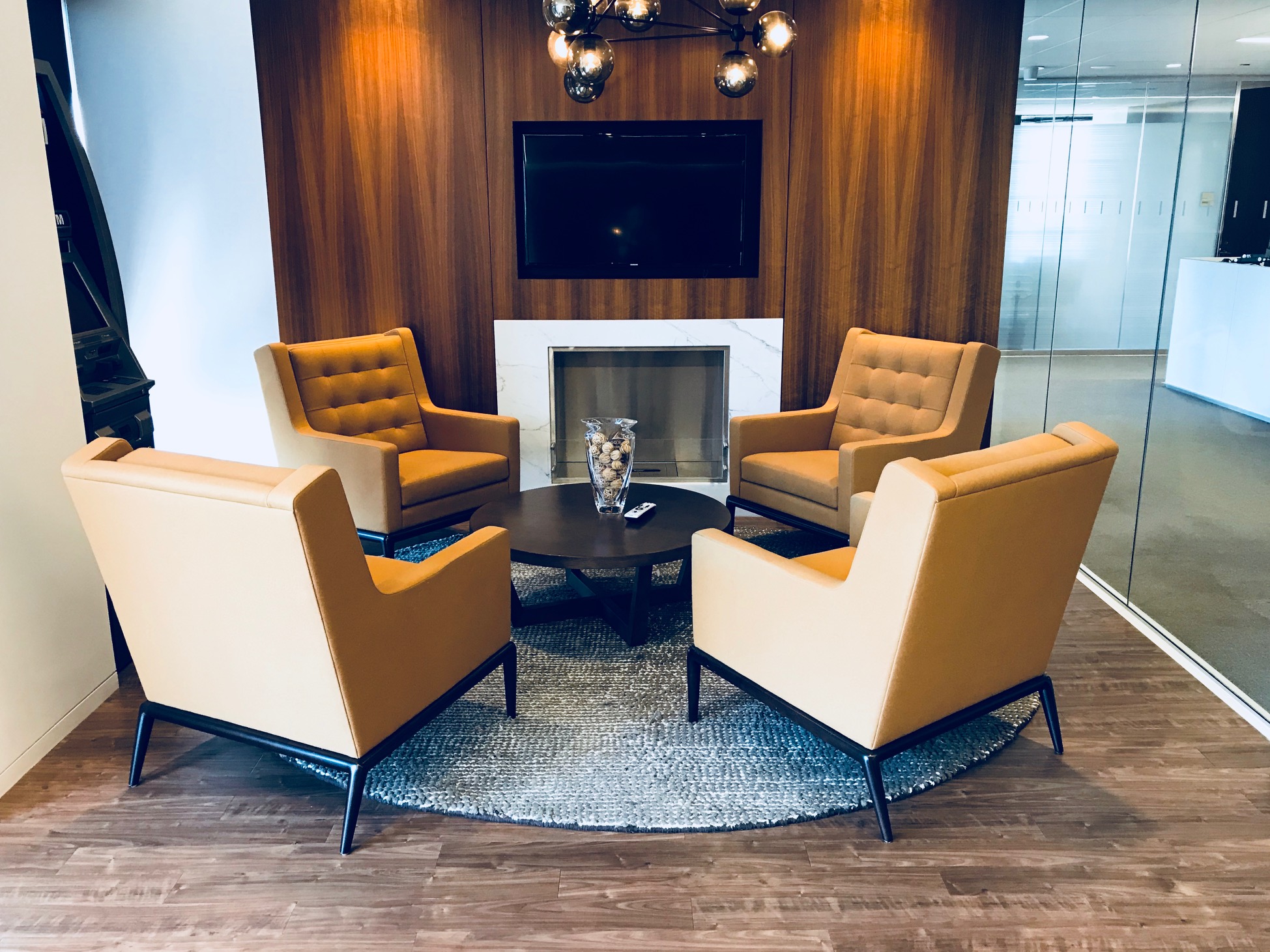
    Latham’s space has its share of small meaningful extras along with the grandiose design features.  For instance, the employee “break room” – designed to look like a Park Hyatt lobby – includes a fireplace surrounded by soft seating.  Latham’s Chicago Director of Administration Susan Wolz said she told the architects that a fireplace would draw Latham’s attorneys and staffs into the space – especially in the middle of a Chicago winter.  She was right.  It’s a magnet on cold days.

    Office FireplaceWater Taps

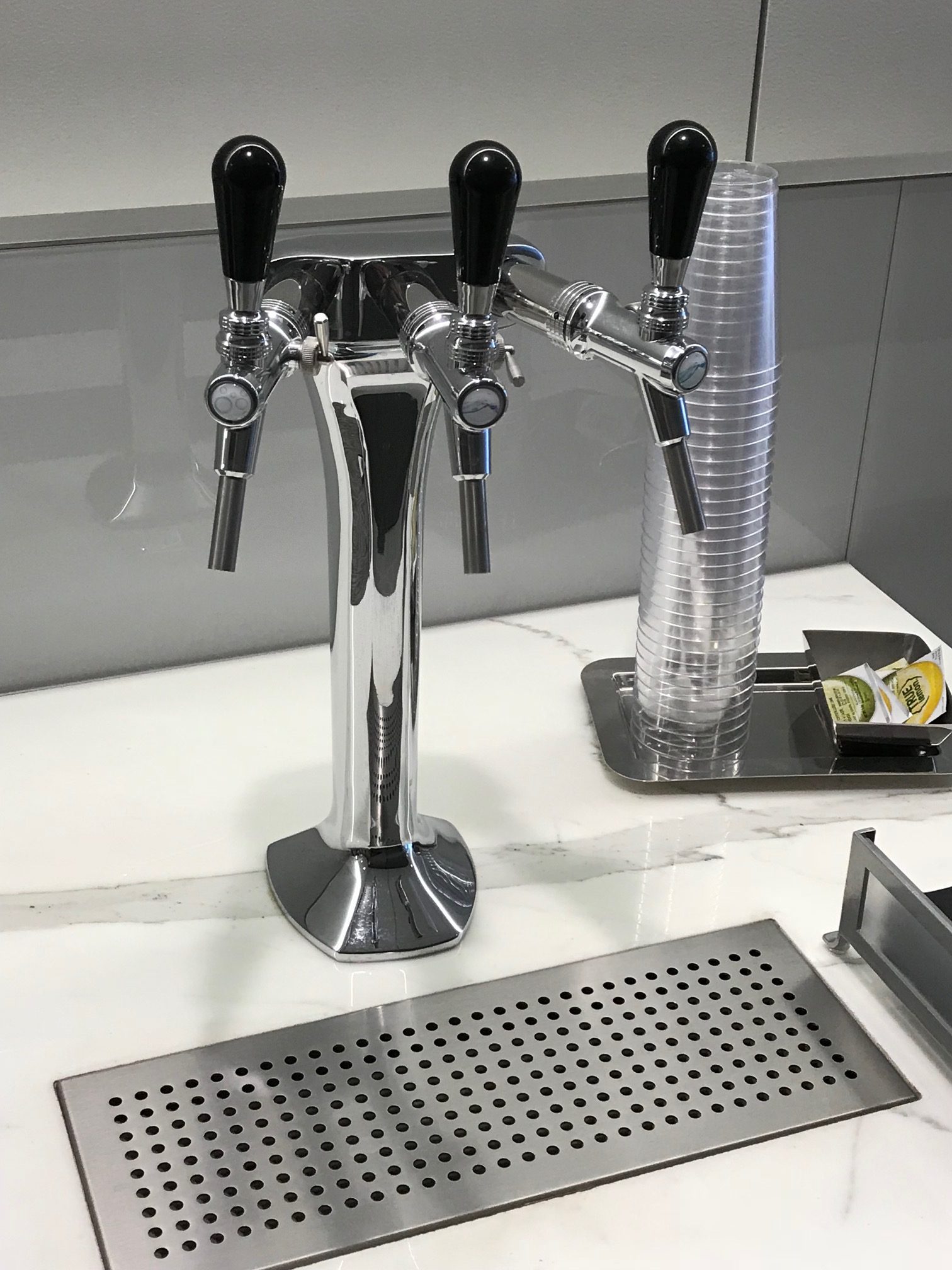
    Another fun small touch: the breakroom and client hospitality areas are equipped with three prong water taps which offer sparkling, room temperature and chilled waters.  The taps are very popular and are cheaper and more environmentally responsible than individually bottled waters.

    Water tapThe Hidden Pool Table

    Latham & Watkins is not the only law firm with little office perks in Chicago.  DLA Piper’s new offices include an employee den area with a large screen TV, comfortable seating, a residential-style kitchen and bookshelves.  At one end of the space, there is a pool table cleverly disguised as a meeting table when a custom table top is set on it.  This is like the white shoe version of the ubiquitous ping pong table.  I love it!

    DLA Piper DenThe moral of my Chicago story: little details add up.  What little step can you take to make your space better?

  • The Upside of Downtime

    The Upside of Downtime

    According to Peter Zeughauser of the eponymous consulting firm, law firm partners should always have a plan for their downtime.

    “Every partner in every firm should have a career development plan that’s consistent with the firm vision and the firm’s plan that should have kicked in when demand is low. If they don’t have a plan, that’s a good time to create one.”

    I love this advice, yet when I recently had the opportunity to take a short sabbatical, I didn’t heed it.  I had no plan for my down time.

    While some would argue that sabbaticals are supposed to be a rest from work and thus “plan-free,” the intention of my sabbatical was to figure out what I wanted to do next in my career.   I also had high hopes of accomplishing a few other things along the way.

    Instead, I binge-watched four seasons of Younger.  I worked out two hours a day.  I spent time with the graduating high school seniors I adore.  I bought my daughter a kitten.

    Seniors
    Class of 2018

    Things I did not do that I wish I had:

    Publish the update to my C Suite survey.  [It’s coming.  Just not quite yet.]

    Write and film a video for my website.

    Go hiking in Park City.

    Despite this unfulfilled wish list, ultimately, I consider my sabbatical a success because I figured out what I want next in my career.

    The Why Behind the Downtime Plan

    So… now I am back at work and I spent a good chunk of this first weekend after returning to work planning for my downtime (although I don’t foresee having much of it).  When I do have a free fifteen minutes, I am not going to waste any time figuring out how to spend it.

    Small Bets

    My downtime plan includes short projects that can be started and stopped easily.  These include:

    • Clean up/out my Outlook contacts.
    • Update my blog mailing list.
    • Work on the “ugly first draft” of articles.
    • Build a Hootsuite backlog.

    Big Chunks

    My plan also includes work on more time-consuming projects:

    • Draft client plans that identify ways I can add value to each individual client. To do this, I start with a solid understanding of each client.  (More on that here.)  Next, I identify topics that are of specific interest to each client so that I can be knowledgeable about those topics and share specific and relevant information with my clients.  Finally, I schedule, implement and track my actions related to each plan.
    • Brainstorm article topics and research projects.

    Lunch Hours

    Finally, my down time plan includes a “lunch hour plan.”  First, I need to qualify this bullet: every day, my plan is to spend lunch with a client, prospect, or new acquaintance, building relationships.  Since that might not be feasible every day, my downtime plan is:

    • Spend time getting to know each team member at my new company and understanding their roles. If I don’t have a client lunch, I should have a co-worker lunch.

    Your Turn

    If you don’t already have a plan for your work downtime, maybe you should spend the next bit of downtime that comes your way creating one.  I promise it will alleviate some of the angst associated with wasted time – especially if you work in a billable hour world.  It also may improve your business development efforts.


  • The Collocation of Attorneys and Other Law Firm Professionals? Yes, Please!

    The Collocation of Attorneys and Other Law Firm Professionals? Yes, Please!

    Sometimes we just miss opportunities.

    For instance, I just read an article by another real estate broker about the future of law firm space.  He made the following assertion:

    Spontaneous face-to-face conversations often are the best ways for lawyers to get input and expertise from their partners. It makes sense for law firms to consider designing their space so that their professionals can easily and organically find one another.

    What, you are wondering, could I possibly take issue with in that statement?

    Well, I think the author fails to acknowledge that it makes sense for law firms to design their space so that lawyers and support staff, the C Suite, operations people, etc. can get input and expertise from each other.  First, it’s not just the lawyers that gain from this interaction and second, lawyers can gain from interaction with the rest of a law firm’s employees as well.  (Note that I am tap dancing to avoid using the now verboten word “non-lawyer.”)

    Law firms that currently do not integrate those members of their staff who regularly interact with lawyers (or who should regularly interact with lawyers) into spaces traditionally occupied primarily by lawyers may be missing a huge opportunity.

    Really? Give me an example.

    Consider practice group managers and business development people.  One large Southeastern law firm assigns such employees to offices near the practice groups they support.  The rationale is that the lawyers will trust and rely on the managers and BD people more if they frequently interact with and get to know them.  The firm also believes this proximity will lead to increased idea generation and collaboration.  Judging from the sophistication of this firm’s industry and practice group platform, its approach is working.

    Are any other firms doing this?

    The practice group managers at another AmLaw 100 firm headquartered in the Pacific Northwest currently office near the practice group chairs they support, and – where possible – near the practice group members.  (Because the firm has several offices across the US, many practice group members are similarly spread out across the US and collocation is not possible.)  Per the Chief Strategy Officer at this firm, the arrangement has worked fairly well.  The only drawback to date has been that the support staff for the practice group managers office on a staff floor so those employees’ interactions with the practice group managers they support can be limited.

    This same firm is in the process of relocating its headquarters office.  In its new building, the current plan is for the firm’s attorneys to occupy high-rise floors while its support staff occupies less-expensive low-rise floor space.  The firm is now wrestling with how to assign workspaces to ensure optimal productivity and interaction between all employees while minimizing occupancy costs.

    This kind of two-tier approach is not uncommon in the legal industry.  In fact, some firms locate support staff in entirely different cities than the attorneys they support in order to take advantage of lower labor or office space costs.

    Is this really that big of a problem?

    To my knowledge, no studies have been done to determine whether communication frequency and quality improves when law firms co-locate support functions with lawyers.  However, per an MIT study conducted by Thomas J. Allen in 1977[i], people collaborate best when they are within a 40-foot radius of one another, and they are unlikely to travel farther than that.

    Allen measured the strong negative correlation between physical distance and frequency of communication.  The “Allen curve” estimates that we are four times as likely to communicate regularly with someone sitting six feet away from us as with someone 60 feet away, and that we almost never communicate with colleagues on separate floors or in separate buildings.[ii]

    Perhaps in recognition of this phenomenon, the executive director of another AmLaw 200 firm seized on the opportunity to build better relationships with the attorneys he supported by moving his office to a different attorney floor every year or two.  With each move, he was able to really get to know a new group of attorneys better.  [More on Smart Collaboration in service firms here.]

    If we want to address this issue, where do we start?

    For law firms that currently do not collocate lawyers with other functions, perhaps the best place to start testing out collocation is with those roles that might reap the most immediate benefit from an adjacency to the attorneys they support.  This may be the project management or pricing teams (for those firms that have them) or the marketing and business development professionals.

    Such collocation can have the side benefit of dissolving physical hierarchies between lawyers and the rest of the firm’s employees.

    As I continue to research how different firms have approached this issue and to what degree of success, I will update this article.  Also, I encourage you to reach out to me and share any relevant experience you have had.


    [i] While this study is now 41 years old, its findings have not been invalidated by any subsequent studies.

    [ii] “Workspaces That Move People,” Ben Waber, Jennifer Magnolfi, and Greg Lindsay, Harvard Business Review, October 2014.